
How to make a TV menu slideshow using Google Slides
CREATE FREE ACCOUNT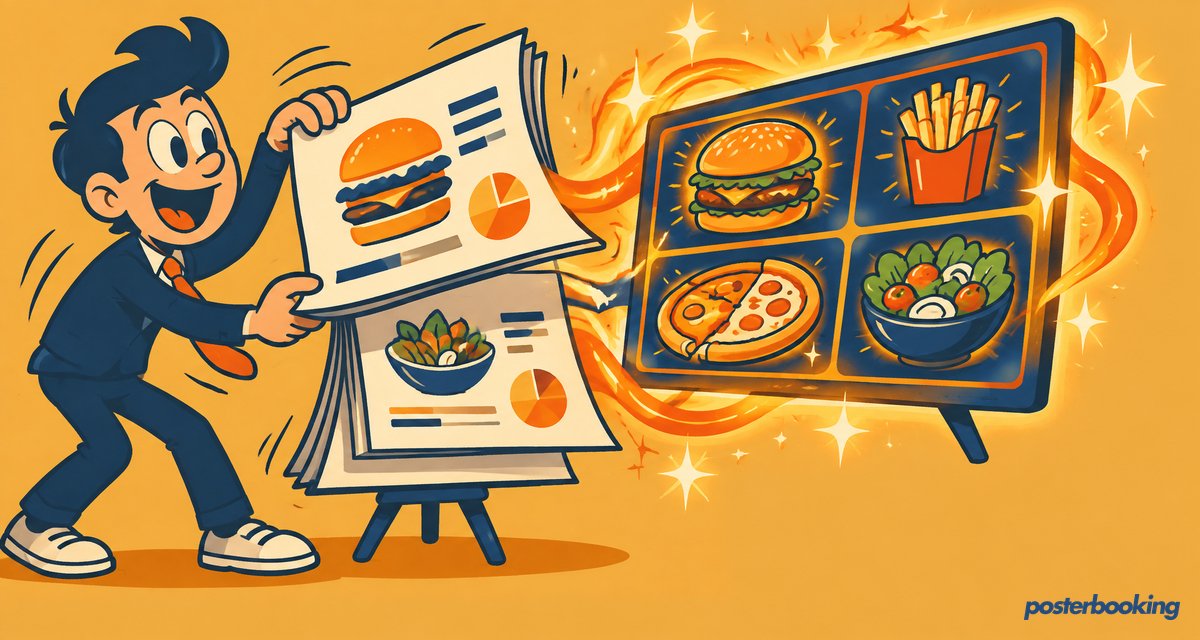

Creating a TV menu slideshow using Google Slides is a great way to display information or promotions on a screen in a public or commercial space. Here's a step-by-step guide on how to make a TV menu slideshow using Google Slides:
1: Prepare your content
Gather all the images, text, and other content you want to include in your TV menu slideshow. You might have items like menu items, promotions, pricing, and branding elements.
2: Create a new presentation
Open your web browser, go to Google Slides, and sign in with your Google account.
3: Choose a template (optional)
Google Slides offers various templates you can use as a starting point. You can choose a template that suits your TV menu or start with a blank slide.
4: Design your slides
Create a new slide for each item or section you want to display.
5: Share the slideshow
Once you're satisfied with your TV menu slideshow, click "File" then "Share" and then "Publish to web"
6: Set slide timings
If you have more than one slide, you can change the duration of each slide by changing the 'auto-advance'. The default is 3 seconds. Make sure the "Start slideshow as soon as the player loads" and "Restart the slideshow after the last slide" boxes are both ticked.
7: Copy the slideshow link
Copy the full slideshow URL provided. it should look like "https://docs.google.com/presentation/..."
8: Paste link on PosterBooking dashboard
Log in to your PosterBooking dashboard and go to the "Content" tab, click on "Websites" and then "Create a URL Module". Name the Module and then paste your Google Slides in the URL box. Make sure to check the 'Reload page on slide' button.
9. Add the Website onto a screen
If you have created a Playlist already, simply add the website module you have created onto your playlist, and assign the playlist to a screen.
10. Update your slides
As your menu changes or you want to add new promotions, simply update the slides in Google Slides, and your TV display will automatically reflect these changes.
By following these steps, you can create and display a TV menu slideshow using Google Slides for your business or event. GET STARTED
Who we are
PosterBooking turns any TV screen into a digital sign. Allowing you to display images and videos for a variety of uses including for advertising, restaurant menus, general messages and more. You simply plug in a device like an Amazon Firestick into the TV, and download the app and upload content via the PosterBooking dashboard.
Frequently Asked Questions
How do I display Google Slides on a TV screen?
You can display Google Slides on a TV by publishing your presentation to the web and pasting the resulting URL into a PosterBooking website module. This setup allows you to assign the module to a playlist that runs on your screen.
Is PosterBooking free to use?
PosterBooking is free for up to 10 screens, though a watermark will appear on these free screens after a 3 month trial period. For setups requiring more displays, the service costs $6.49 per screen per month starting from the 11th screen.
Will my TV menu update automatically when I edit my Google Slides?
Yes, your TV display will automatically reflect any changes you make to the slides in Google Slides. This feature makes it easy to update menu items or pricing without needing to reupload files to the dashboard.
What hardware do I need to use PosterBooking on my TV?
The software is compatible with Fire TV Stick, Amazon Signage Stick, Android TV, Chromebox, Windows, and Raspberry Pi. You simply plug the device into your TV and download the app to get started.
How do I get the Google Slides link to work for digital signage?
You should click File then Share and then Publish to web to get a URL for your presentation. Before copying the link, ensure you check the boxes to start the slideshow as soon as the player loads and to restart it after the last slide.
Display signage live in less than 2 minutes
Seconds to sign up. Seconds to add a screen. Seconds to add content and go live!