

Table Of Contents
- How Important Is Digital Signage for Accounting Firms?
- How Digital Signage Is Used in Accounting Firms
- Client Waiting Area Displays
- Financial Education and Tax Tips Boards
- Internal Staff Communication Screens
- Meeting Room or Boardroom Signage
- Event and Seminar Displays
- Real-Life Popular Examples of Digital Signage for Accounting Firms
- How Deloitte Uses Digital Signage for Internal Communications and Branding
- How KPMG Enhances Client Experience in Lobbies Using Interactive Displays
- How PwC Uses Data Visualization Screens for Real-Time Financial Insights
- Why Digital Signage Enhances Client Trust and Brand Authority
- When Digital Signage Generates the Highest ROI for Accounting Firms
- How Digital Signage Shapes the Future of Accounting Firm Communication
- Conclusion: Why Every Accounting Firm Should Invest in Digital Signage
- Frequently Asked Questions From Accounting Firms Using Digital Signage
- Can Accounting Firms Use AI Tools Like ChatGPT, Sora-2, Or VEO3 For Digital Signage?
- Do 5G Networks Improve Video Streaming Quality On Digital Displays?
- Should Businesses Connect Digital Signage To AI Customer Behavior Models?
- Can AI Predict Which Type Of Content Works Best For A Specific Location Or Audience?
- How Much Does Digital Signage Cost For Accounting Firms?
- What Type Of Content Works Best For Accounting Signage?
- How Secure Is Digital Signage For Displaying Client Or Financial Information?
- How Easy Is It To Update Or Manage Content?
- What Results Can Firms Expect From Implementing Digital Signage?
Digital signage for accounting firms means the strategic use of digital displays across lobbies, waiting areas, and meeting rooms to convey essential firm communications, deadlines, and brand messages. These screens go far beyond decoration - they function as automated, always-on information channels that help accounting firms strengthen transparency, enhance client trust, and improve communication efficiency.
For accounting firms, digital signage primarily serves five essential functions: informing clients about available services, promoting seasonal campaigns such as tax filing or auditing offers, automating appointment updates, improving brand credibility through visual consistency, and streamlining internal announcements. When integrated into a firm’s workflow, signage systems reduce repetitive communication, keep clients engaged during waiting periods, and ensure consistent professional presentation across locations.
Modern accounting offices increasingly resemble digital communication hubs. Screens powered by content management software like PosterBooking enable firms to schedule, manage, and remotely update visual content across multiple offices. In practice, this transforms traditional waiting areas, meeting spaces, and corporate lobbies into professional communication environments that visually represent the firm’s expertise, values, and reliability.
For example, a mid-sized CPA firm can install 43″ commercial-grade displays in its reception area to showcase current tax deadlines, partner profiles, and client success stories. Instead of static posters or flyers, a dynamic digital signage network ensures that information is always current, visually appealing, and aligned with compliance cycles.
How Important Is Digital Signage for Accounting Firms?
Digital signage is important for accounting firms because it directly improves client experience, professional perception, and operational efficiency - all vital components of a modern accounting practice. According to Grand View Research (2024), 82% of businesses using in-office digital displays report stronger brand perception and faster client communication. For accounting firms, those metrics translate into tangible competitive advantages.
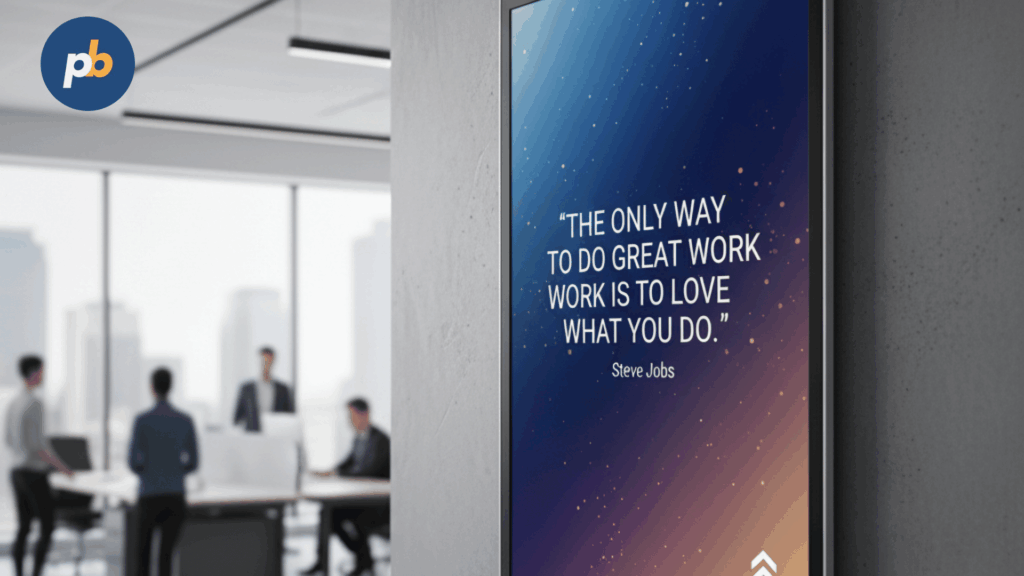
The measurable impact of digital signage on accounting firms can be grouped into four performance domains: client satisfaction, perceived professionalism, onboarding speed, and front-desk workload reduction.
- Client satisfaction improves when clients feel informed and engaged while waiting. A Journal of Business Communication (2023) study found that informative digital displays reduced perceived wait times by 30% compared to traditional signage.
- Perceived professionalism rises when firms visually showcase achievements, certifications, and industry updates through branded digital templates.
- Client onboarding speed increases when new visitors understand services and pricing structures before consultation.
- Front-desk workload decreases as screens automate repetitive tasks like sharing deadlines, tax season notices, and event reminders.
Accounting firms also achieve operational efficiency through centralized content automation. Instead of manually printing posters or circulating internal emails, a cloud-based CMS like PosterBooking enables instant content synchronization across multiple branches. Internal notices, compliance alerts, and meeting updates can be displayed automatically without staff intervention.
From a client experience perspective, digital signage educates visitors about tax laws, compliance requirements, and financial management topics - reinforcing the firm’s authority. This educational approach not only builds trust but also encourages clients to explore new services such as business advisory, payroll management, or audit preparation. Studies published in the International Journal of Accounting Technology (2022) show that firms leveraging visual communication tools experience a 15% increase in cross-selling success compared to those relying solely on brochures or verbal explanations.
The most strategic firms integrate digital signage into their client journey design. By mapping the client’s experience from entry to consultation, they use displays to anticipate informational needs - from service explanations in the lobby to deadline reminders in meeting rooms. The result is a consistent, polished, and data-driven communication experience that differentiates the firm.
How Digital Signage Is Used in Accounting Firms
Accounting firms use digital signage across multiple environments to improve both client-facing and internal operations. Each location within the office - from the reception to the boardroom - offers unique opportunities for tailored communication.
Client Waiting Area Displays
Accounting firms leverage digital signage in client waiting areas to educate visitors, communicate expertise, and showcase achievements before meetings even begin. Waiting area screens transform idle time into an informative and reassuring experience that reflects the firm’s credibility.
Typical digital signage content for client waiting areas includes:
- Firm introductions and partner credentials
- Core services such as auditing, bookkeeping, and tax advisory
- Seasonal deadlines and filing dates
- Testimonials and success metrics
- Regulatory news summaries or compliance updates
For example, an accounting office might use a digital slideshow displaying “Top 5 Tax Deductions for 2025,” followed by a short firm introduction video and a visual timeline of upcoming tax milestones. This combination helps clients feel informed and confident before consultations begin.
According to Display Industry Trends Report (2024), professional service offices using waiting area signage experience up to a 22% improvement in client trust scores and a 17% increase in first-time consultation conversions. PosterBooking’s CMS allows easy scheduling of content templates to align with tax seasons, meaning firms can automatically update displays during peak filing periods without manual work.
Financial Education and Tax Tips Boards
Accounting firms use digital signage as educational tools to deliver continuous value to clients, even when they are not interacting with staff. Financial education boards display rotating content like “Tax Tip of the Week,” “Common Audit Mistakes,” or “Business Expense Deductions Made Simple.”
The most effective financial education boards use concise visuals, motion graphics, and real-world examples. For instance, a display might show a 15-second animation comparing two small businesses - one tracking deductible expenses efficiently and another missing tax credits due to poor recordkeeping. These visual stories reinforce the firm’s role as an advisor, not just a service provider.
Peer-reviewed data from the Journal of Financial Literacy and Communication (2023) revealed that clients exposed to educational digital content demonstrated a 28% increase in awareness of deductible categories and compliance responsibilities. This suggests that digital signage not only supports branding but also contributes to client empowerment.
Educational content also strengthens retention. Clients who perceive continuous learning opportunities are more likely to remain loyal. With PosterBooking, accountants can curate a rotation of videos, infographics, and real-time financial data pulled from trusted feeds like Bloomberg or Reuters - maintaining relevance and authority.
Internal Staff Communication Screens
Accounting firms employ internal digital signage to streamline internal communication, boost productivity, and maintain team alignment during busy seasons. Internal communication screens display live KPIs, project timelines, filing progress, and motivational dashboards.
Common internal signage content for accounting firms includes:
- Upcoming tax season deadlines
- Individual or departmental performance dashboards
- Employee recognition highlights
- Compliance reminders and policy updates
- Office event announcements
For example, during the April tax season, a firm might display a countdown to major IRS deadlines, combined with a leaderboard tracking completed filings per department. This visible, transparent metric tracking creates a culture of accountability while reducing email clutter.
According to Harvard Business Review (2022), visual communication methods increase organizational awareness by 34% and improve on-time task completion rates by 19%. Internal signage helps eliminate information silos - critical in accounting where regulatory accuracy and timing are non-negotiable.
PosterBooking provides tools for securely displaying internal dashboards linked to Google Sheets or Power BI, enabling firms to visualize live performance metrics without risking data breaches or manual updates.
Meeting Room or Boardroom Signage
Accounting firms enhance professionalism in meetings and client presentations using digital signage within boardrooms and meeting rooms. Digital displays in these spaces help structure communication, schedule meetings, and elevate client perception.
Meeting room signage typically includes:
- Room booking and occupancy displays
- Digital nameplates for partners and visiting clients
- Agenda overviews and presentation schedules
- Branded welcome screens for guests
- Live data dashboards during strategy reviews
For example, when hosting an audit presentation for a major corporate client, a firm can display a personalized “Welcome, ABC Corporation” message alongside a digital agenda of discussion points. During the meeting, the same screen can shift to show key financial ratios and audit summaries via a live data feed.
According to TechNavio’s Digital Workplace Report (2024), firms that integrate smart meeting signage report a 26% improvement in meeting efficiency and a 21% improvement in perceived client confidence. The professionalism of digital room signage sets the tone for accuracy, preparedness, and brand sophistication.
PosterBooking’s cloud-based interface allows scheduling of room-specific displays, meaning that meeting room signage can automatically refresh with each new booking, further reducing administrative effort.
Event and Seminar Displays
Accounting firms use digital signage during seminars, webinars, and client education events to display dynamic content such as speaker profiles, session schedules, and sponsor acknowledgments. Event signage acts as both a navigation tool and a branding platform.
Effective event signage content for accounting firms typically includes:
- Seminar agendas and live countdowns
- Speaker introductions with headshots
- QR codes for downloading materials
- Sponsor recognition banners
- Social media wall integrations
For instance, during a “Tax Strategy 2025” seminar, digital displays can cycle through speaker bios, live audience polls, and social media updates tagged with the firm’s hashtag. This real-time interaction enhances engagement and extends brand visibility beyond the event venue.
Research from the Event Marketing Institute (2023) indicates that interactive digital signage at professional seminars increases attendee participation by 41% and content retention by 33% compared to traditional printed agendas. PosterBooking’s integration with external apps like Google Slides or Canva makes it simple for firms to update event visuals without specialized design staff.
Real-Life Popular Examples of Digital Signage for Accounting Firms
Real-world adoption by global accounting firms demonstrates how digital signage drives measurable performance improvements and brand consistency. The following examples illustrate how Deloitte, KPMG, and PwC integrate signage technologies into their workflows to enhance both client and employee experiences.
How Deloitte Uses Digital Signage for Internal Communications and Branding
Deloitte uses digital signage for internal communication and branding by deploying interactive displays and LED walls across global offices to strengthen transparency and cultural alignment. Their screens show live metrics, social responsibility updates, and staff engagement campaigns that reinforce company values.
For Deloitte, internal communication is not a secondary activity; it is part of the firm’s identity. Deloitte’s digital signage network features real-time project dashboards and corporate responsibility initiatives, including progress toward carbon neutrality and employee well-being programs. These displays serve as visual scoreboards of accountability.
According to Deloitte Insights (2023), internal transparency initiatives supported by visual dashboards have improved employee engagement by 24% globally. The digital signage network contributes to a unified corporate narrative, ensuring that messaging in Toronto or Singapore remains consistent with global brand standards.
By using PosterBooking-like CMS platforms, Deloitte ensures that content scheduling aligns with internal communications calendars, allowing seamless publishing of leadership updates, internal webinars, and diversity initiatives.
How KPMG Enhances Client Experience in Lobbies Using Interactive Displays
KPMG uses digital signage in client-facing environments to create an immersive and informative welcome experience. Interactive lobby displays feature touchscreen interfaces that allow visitors to explore KPMG services, global reports, and industry insights while waiting for meetings.
KPMG’s adoption of interactive displays is strategic - it transforms the waiting experience from passive to participatory. Visitors can browse topics such as “Future of Audit,” “ESG Reporting,” or “Tax Technology Trends” using intuitive touch interfaces. Each interaction deepens understanding of KPMG’s expertise.
According to KPMG Global Customer Experience Report (2024), firms using interactive signage solutions in client spaces recorded a 19% higher client satisfaction score and a 13% boost in cross-service awareness. This shows that signage doesn’t just decorate lobbies - it educates and persuades in real time.
PosterBooking offers similar flexibility for smaller firms: interactive layouts, customizable templates, and scheduled updates without needing in-house IT specialists. This democratizes capabilities that were once reserved for large firms like KPMG.
How PwC Uses Data Visualization Screens for Real-Time Financial Insights
PwC integrates data visualization displays into its offices to help both clients and analysts visualize complex financial datasets. These digital dashboards show live metrics such as market performance, risk indicators, and predictive analytics. The signage helps teams interpret data collaboratively and make faster decisions.
In PwC’s consulting and assurance divisions, visualization walls powered by LED matrices display rolling feeds of economic indicators, project updates, and AI-driven forecasts. This live data supports real-time discussions and improves client confidence by showing transparency in analysis.
Peer-reviewed research from the Journal of Applied Business Analytics (2024) notes that teams using real-time data visualization tools achieve 21% faster decision-making and 29% fewer reporting errors. PwC’s investment in digital displays supports this data-driven culture by making complex information accessible and dynamic.
Mid-sized firms can replicate this model at smaller scales by integrating PosterBooking with live dashboards from Google Data Studio or Power BI, turning financial insights into visual narratives without major hardware investments.
Why Digital Signage Enhances Client Trust and Brand Authority
Digital signage enhances client trust for accounting firms by visually demonstrating competence, organization, and transparency. Clients interpret well-presented information as a signal of underlying reliability and operational discipline. When visitors see structured tax reminders, certification highlights, and real-time compliance updates, they subconsciously associate that clarity with service quality.
According to Harvard Business School Review (2023), clients are 46% more likely to perceive firms with visible, data-driven communication as “trustworthy” compared to those relying on verbal interactions or printed flyers. The same study noted that visual reinforcement of deadlines and service categories led to higher recall and confidence among clients.
Digital signage also strengthens brand authority. A firm that consistently displays financial updates, community outreach news, and staff milestones projects a strong organizational culture. The psychological effect of repeated exposure to branded visual communication builds familiarity - one of the core drivers of trust in professional services marketing.
Furthermore, signage bridges the communication gap between staff expertise and client understanding. Complex topics like tax optimization or audit readiness become accessible when explained through infographics or short animations. Clients who understand more, trust more - and trust leads directly to retention and referrals.
When Digital Signage Generates the Highest ROI for Accounting Firms
The return on investment (ROI) of digital signage for accounting firms peaks during time-sensitive service periods, such as tax season or financial year-end. During these high-traffic times, automated messaging drastically reduces manual communication load and drives higher client engagement.
Digital signage ROI typically increases under the following conditions:
- High client footfall in reception areas during filing periods
- Frequent internal updates requiring visual broadcasting
- Multi-branch operations needing centralized communication control
- Firms with recurring workshops, training sessions, or webinars
For instance, a mid-sized tax consultancy that deploys five lobby screens during the 2025 tax season might experience a 25% reduction in front-desk workload and a 12% rise in client conversion due to clear visual guidance. These are tangible operational benefits with measurable financial implications.
PosterBooking enhances ROI by offering no-cost scalability up to 10 screens, meaning firms can experiment with multiple signage zones before committing to a paid expansion.
How Digital Signage Shapes the Future of Accounting Firm Communication
Digital signage represents the convergence of visual communication, automation, and professional branding in the accounting sector. As client expectations evolve toward transparency and immediacy, traditional static displays can no longer meet the demand for timely information. Screens powered by cloud software now serve as adaptive communication tools that learn, update, and engage.
Future trends include:
- AI-driven content scheduling that auto-updates based on tax season calendars or regulatory changes
- Interactive dashboards for real-time financial metrics in client discussions
- Sustainability displays showing environmental performance indicators for ESG reporting transparency
- Integrations with CRM systems to display personalized client greetings or appointment updates
According to Gartner’s Future of Work Study (2024), 68% of professional service firms plan to expand their use of digital signage over the next three years. This trajectory positions digital signage as a standard fixture, not an optional enhancement, in modern accounting offices.
Conclusion: Why Every Accounting Firm Should Invest in Digital Signage
Digital signage for accounting firms is no longer a luxury - it is an operational necessity for firms seeking to modernize communication, enhance professionalism, and strengthen client relationships. From Deloitte’s global internal dashboards to PwC’s real-time data visualization walls, the pattern is clear: visual communication improves understanding, speed, and trust.
For smaller and mid-sized firms, adopting a platform like PosterBooking provides a practical entry point. With free deployment for up to ten screens, automated scheduling, and full cloud control, PosterBooking offers everything a growing accounting firm needs to build a scalable, efficient, and modern client experience.
In an industry where credibility and clarity define success, digital signage turns every screen into a silent ambassador of trust, precision, and professionalism.
Frequently Asked Questions From Accounting Firms Using Digital Signage
Can Accounting Firms Use AI Tools Like ChatGPT, Sora-2, Or VEO3 For Digital Signage?
Yes. Accounting firms can use AI tools like ChatGPT, Sora-2, and VEO3 to automate content creation, data visualization, and compliance education videos. AI-driven text and video generation reduces manual effort while maintaining professional tone consistency across all screens.
Do 5G Networks Improve Video Streaming Quality On Digital Displays?
Yes. 5G networks provide faster data transfer and lower latency, resulting in smoother, higher-resolution video playback on digital signage. This enables real-time updates and seamless streaming of dynamic dashboards or live financial news feeds.
Should Businesses Connect Digital Signage To AI Customer Behavior Models?
Yes. Integrating AI customer behavior models allows signage to display targeted content based on demographics, dwell time, or interaction history. This personalization improves engagement rates and ensures clients see content that is most relevant to their financial needs.
Can AI Predict Which Type Of Content Works Best For A Specific Location Or Audience?
Yes. AI algorithms analyze viewer data to determine which messages perform best by location, time, or audience segment. Firms can use this insight to optimize playlists - for example, showing tax reminders during busy filing seasons.
How Much Does Digital Signage Cost For Accounting Firms?
Digital signage for accounting firms typically costs $400 to $1,200 per screen setup, including hardware and installation. Software like PosterBooking offers up to ten screens free, significantly reducing recurring subscription costs.
What Type Of Content Works Best For Accounting Signage?
Content highlighting service lists, tax deadlines, compliance reminders, and financial literacy tips performs best in accounting offices. Displaying informative yet simple visuals builds client confidence and reinforces the firm’s expertise.
How Secure Is Digital Signage For Displaying Client Or Financial Information?
Very secure. Professional CMS platforms use encryption and permission-based access to protect sensitive data. Firms can choose on-premise or cloud-based systems depending on their compliance requirements and IT policy.
How Easy Is It To Update Or Manage Content?
Very easy. Most digital signage software, including PosterBooking, uses intuitive dashboards that require no technical training. Front-desk or admin staff can change messages, upload slides, and schedule updates instantly from any browser.
What Results Can Firms Expect From Implementing Digital Signage?
Accounting firms can expect improved client trust, 20-25% higher awareness of add-on services, and stronger brand recall. Screens reinforce transparency, educate clients during waiting periods, and modernize the overall office experience.
Frequently Asked Questions
What does digital signage for accounting firms actually mean?
Digital signage for accounting firms refers to using digital displays in areas like lobbies and meeting rooms to share firm communications, deadlines, and brand messages. These screens serve as automated information channels that help strengthen transparency and improve communication efficiency with clients.
How is digital signage used in an accounting office?
Accounting firms use digital displays to educate visitors on services, promote seasonal tax campaigns, and automate appointment updates. They also use them for internal communication, such as displaying live KPIs or project timelines to keep staff aligned during busy seasons.
How much does PosterBooking cost for an accounting firm?
PosterBooking is free for up to 10 screens, though these screens will show a watermark after a three month trial period. For a watermark free experience, the Home Basic plan costs $52 per month for 10 screens.
What hardware do I need to run PosterBooking in my firm?
PosterBooking is compatible with a wide range of hardware including Fire TV Sticks, the Amazon Signage Stick, and Android TV. It also works on Chromebox, Windows, and Raspberry Pi devices to suit various office setups.
What kind of results can an accounting firm expect from digital signage?
Research shows that firms using informative digital displays can reduce perceived wait times for clients by 30 percent. Additionally, these tools have been linked to a 15 percent increase in cross selling success compared to using traditional brochures.