
The Ultimate 2026 Guide to Background Music for Business
Table Of Contents
- The Psychology of Sound: Why Silence is Bad for Business
- Industry Specific Strategies: From Gyms to Salons
- The Licensing Minefield: PRS, PPL, and the Spotify Trap
- The Synergy of Sound and Sight: Music Meets Digital Signage
- Implementation in 2026: Technology and Trends
- Why PosterBooking is Your Visual Partner
- Frequently Asked Questions
DIGITAL SIGNAGE RESOURCES
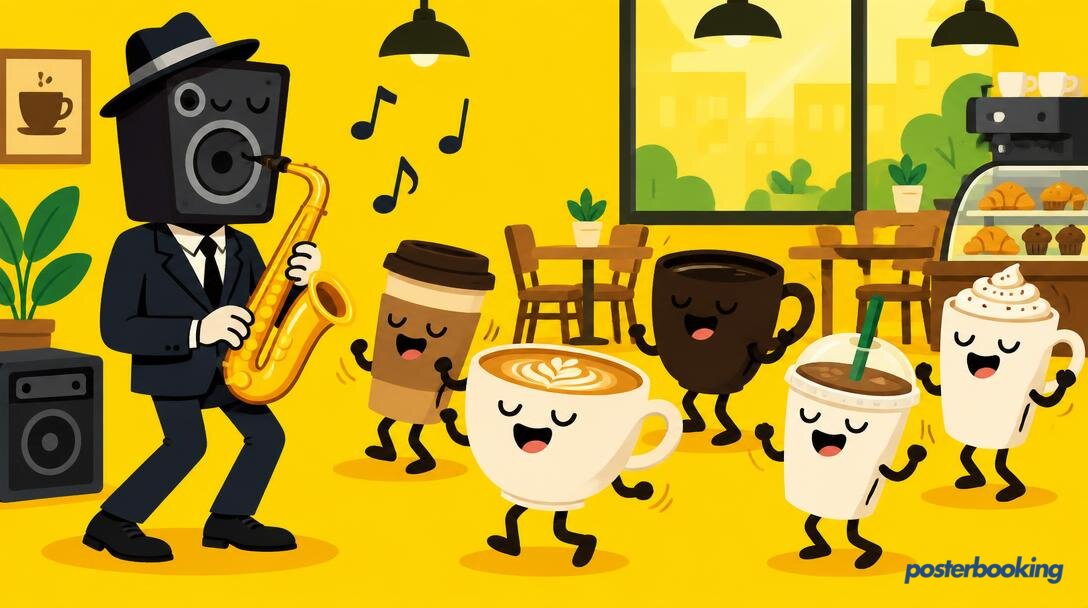
Imagine walking into a high-end boutique where the only sound is the rhythmic clicking of your own heels on a polished marble floor and the heavy, judgemental breathing of a sales assistant who clearly thinks your trainers were a mistake. It is uncomfortable. It is awkward. It makes you want to leave immediately, perhaps via the nearest fire exit. This is the "silence tax," a metaphorical fee paid by businesses that neglect their auditory environment. Silence does not just feel empty; it feels exposing. It makes customers whisper as if they are in a library, and whispered customers are rarely high-spending customers.
Background music for business is not just about filling the void. It is a calculated, psychological tool used to influence how long people stay, how much they spend, and how they perceive your brand. By 2026, the science of "audio branding" has moved far beyond just putting a radio on the counter and hoping for the best. It is now an integrated part of the customer experience, working hand-in-hand with visual elements like digital signage to create a seamless atmosphere. In this comprehensive guide, we will explore why music matters, the specific needs of different industries, the terrifyingly complex world of licensing, and how you can combine sound with screens to dominate your market.
Table of Contents
The Psychology of Sound: Why Silence is Bad for Business
Humans are sensory creatures. We are constantly scanning our environment for cues on how to behave. In a silent shop, every movement feels spotlighted, leading to a "hushed" atmosphere that discourages browsing. Conversely, the right background music for business acts as a social lubricant. It provides a layer of privacy for conversations and creates a "vibe" that tells the customer exactly what kind of establishment they are in. If your shop is silent, you are essentially telling your customers that their presence is being monitored with the intensity of a hawk watching a field mouse.
The Tempo Effect
Research has shown for decades that tempo influences pace. In a supermarket, slow-tempo music often results in shoppers moving more slowly through the aisles, which leads to more impulse purchases. This is not just a theory; it is a measurable increase in basket value. In a fast-food restaurant during a busy lunch rush, up-tempo tracks can encourage faster eating and quicker turnover, which is exactly what the manager wants when there is a queue out the door. By 2026, many businesses are using smart systems that adjust tempo based on real-time foot traffic data, ensuring the "heartbeat" of the shop matches the needs of the bottom line.
Sonic Seasoning: The Taste of Music
One of the more fascinating developments in the psychology of background music for business is "sonic seasoning." This is the idea that sound can actually alter our perception of taste. Studies have shown that high-pitched, tinkling sounds can enhance the perception of sweetness, while low-pitched, brassy sounds can make food taste more bitter or savoury. If you are running a dessert bar in 2026, your playlist should probably lean towards the higher frequencies unless you want your customers to think your chocolate cake tastes like a burnt log.
Volume and Perception
Volume is a delicate balance. Too loud, and you irritate people (and potentially breach health and safety regulations). Too quiet, and it sounds like a broken speaker. Generally, younger demographics tolerate louder music, which they associate with energy and excitement. Older demographics often prefer music as a true background element, allowing for easy conversation. If you are running a bar, the volume should rise as the night progresses; if you are running a library, perhaps keep the heavy metal for your personal headphones. Consistency in volume is also key; sudden jumps in sound levels can startle customers, leading to a "fight or flight" response that usually ends with them fleeing your store.
The Familiarity Paradox
Playing "Top 40" hits can be a double-edged sword. While familiar music can make people feel comfortable, it can also be distracting. If a customer starts singing along to a catchy chorus, they are thinking about the song, not your products. Many modern businesses are opting for "curated discovery" playlists, tracks that sound familiar in style but are not necessarily chart-toppers. This keeps the brain engaged without the distraction of an earworm. It also prevents the "supermarket effect" where everyone in the building is collectively suffering through a tenth consecutive play of a generic Christmas song in mid-November.
Industry Specific Strategies: From Gyms to Salons
Not all background music for business is created equal. What works for a high-intensity interval training class will be an absolute disaster for a spa offering aromatherapy massages. The goal is to match the audio to the emotional state you want your customers to achieve.
Retail: The Art of the Browse
In retail, the music needs to match the price point. High-end luxury brands often use classical or minimalist electronic music to convey a sense of sophistication and "timelessness." It suggests that the products are an investment, not a whim. Fast-fashion retailers, on the other hand, use high-energy pop and dance music to create a "party" atmosphere, making the act of buying a five-pound t-shirt feel like a lifestyle choice. The goal here is to reduce the "pain of paying" by keeping the energy high and the dopamine flowing.
Restaurants and Cafes: Setting the Pace
For a cafe, acoustic sets or "lo-fi" beats are the gold standard. They provide enough sound to mask the grinding of coffee beans but remain relaxed enough for people to work on their laptops for three hours while buying a single espresso. Restaurants have a harder task. During dinner, the music should be sophisticated and unobtrusive. However, if the goal is to turn tables quickly during a busy shift, increasing the BPM (beats per minute) slightly towards the end of the meal can subtly nudge diners to ask for the bill without you having to awkwardly hover nearby with a credit card machine.
Gyms and Fitness Centres: The Pumping Iron Playlist
Silence in a gym is eerie. All you can hear is the clanking of weights, the heavy breathing of the exhausted, and the occasional grunt of someone overestimating their bench press. Background music here is essential for motivation. It needs to be high-energy, rhythmic, and loud enough to drown out the sound of the treadmill's motor. Many gyms now synchronise their music with their digital signage, showing high-energy music videos or fitness tips that match the beat. If the music stops in a gym, the collective willpower of the members often drops by at least forty percent.
Salons and Spas: The Zen Zone
This is the one place where "Pan Flute Greatest Hits" is actually acceptable. The goal is relaxation. The music should have no sudden shifts in volume or tempo. It is about creating a "bubble" where the outside world (and the fact that the customer is paying sixty pounds for a haircut) disappears. In 2026, spas are even using "binaural beats" to help induce a state of deep relaxation in their clients.
Offices: Productivity vs Distraction
Office music is controversial. Some people love it; some people want to throw the speakers out the window. The modern 2026 consensus is that low-volume, non-lyrical music (like ambient or chill-hop) can help focus by masking distracting office noises like clicking keyboards or Brian from accounting talking about his weekend. If the music has lyrics, it often competes with the "internal monologue" needed for writing or problem-solving, so keep it instrumental for the sake of the team's sanity.
Healthcare and Dental Practices: Anxiety Reduction
No one likes the sound of a dentist's drill. It is a sound that triggers a primal fear in even the bravest souls. Background music in healthcare settings serves a vital purpose: distraction. Soft, melodic music can lower heart rates and reduce perceived anxiety in waiting rooms. It makes the twenty-minute wait for a check-up feel significantly less like an impending doom.
The Licensing Minefield: PRS, PPL, and the Spotify Trap
Here is the part where everyone gets a bit grumpy. You cannot just plug your phone into a speaker and play your personal Spotify "Summer Vibes 2024" playlist. That is illegal. It is a breach of copyright law and the terms of service of the streaming platform. It does not matter if you pay for "Premium" or "Family" or "Supreme Overlord" editions; those are all for personal use.
Why Personal Accounts are Prohibited
When you pay for a personal Spotify, Apple Music, or Amazon Music subscription, you are paying for a "private, non-commercial" licence. As soon as you play that music in a public space (a shop, a waiting room, a toilet), it becomes a "public performance." This requires a different type of licence that ensures the artists, songwriters, and producers get paid for the commercial use of their work. Think of it this way: if you are using their art to help you sell shoes, they deserve a cut of the shoe money.
The Big Four: PRS, PPL, ASCAP, and BMI
In the UK, you generally need a "TheMusicLicence" from PPL PRS Ltd. PPL (Phonographic Performance Limited) collects royalties for the performers and record labels, while PRS (Performing Right Society) collects royalties for the songwriters and publishers. If you are in the US, you deal with ASCAP, BMI, SESAC, and GMR. These organisations have "compliance officers" who walk into businesses specifically to check if they are playing music without a licence. They are usually very good at their jobs, and they do not accept "I didn't know" as a valid excuse.
Cost Ranges
We cannot give you an exact price because it depends on the size of your premises, the number of employees, and how you play the music. However, expect to pay a few hundred pounds per year for a standard small business. It is a legitimate business expense, much like your electricity bill, your internet, or the overpriced coffee beans for the staff room. The cost is calculated based on factors like the square footage of your audible area and the nature of your business.
Business-Specific Streaming Services
To stay legal and avoid the headache of individual royalty payments, look for services specifically designed for business. These services include the necessary commercial licences in their monthly subscription fee (though in some regions, you still need the local PRO licence on top). They also offer features like "scheduled playlists" so you don't have to worry about what is playing at 9 AM on a Tuesday. Some even allow you to insert your own audio adverts between tracks, which is a great way to cross-promote with your digital signage.
The Synergy of Sound and Sight: Music Meets Digital Signage
While music sets the mood, digital signage provides the message. In 2026, the most successful businesses are those that treat audio and visual as a single, unified experience. It is about creating a "brand bubble" that envelopes the customer the moment they step through the door.
Multi-Sensory Branding
When a customer hears a specific style of music and sees a corresponding visual on a screen, the brand message is reinforced twice as effectively. For example, a sports shop playing high-energy rock while showing slow-motion footage of athletes on high-definition screens creates a powerful, immersive environment. The audio tells them how to feel, and the visuals tell them what to buy. If the music and the screens are out of sync (e.g., relaxing jazz paired with aggressive flashing sale graphics), the customer's brain gets confused, and a confused brain rarely reaches for its wallet.
Using Screens to Prompt Sales
Music gets them in the door; screens get them to the till. You can use your digital signage to display "Today's Special" or "Flash Sale" prompts that coincide with a change in the music's energy. If you are running a cafe, you could have a screen showing a steaming cup of latte while the music shifts to something warm and inviting. You could even use * digital signage solutions to display social media feeds that match the "vibe" of the current playlist, encouraging customers to share their experience online.
Dayparting: The Rhythm of the Day
"Dayparting" is the practice of changing your content based on the time of day. Your background music for business should follow a schedule: calm and welcoming in the morning, upbeat during the lunch rush, and perhaps a bit more sophisticated in the evening. Your digital signage should follow this exact same rhythm. In the morning, show breakfast deals and weather updates. In the afternoon, switch to lunch specials and upcoming event promotions. Using PosterBooking, you can easily schedule these visual changes to match your audio playlist, ensuring a consistent atmosphere 24/7.
Consistency is Key
There is nothing more jarring than a shop playing relaxing jazz while a screen flashes bright red "SALE SALE SALE" graphics with high-speed transitions. The two must be in sync. Your digital signage software should be flexible enough to allow you to update visuals as quickly as you update your playlist. If you decide to have a "90s Throwback Thursday," both your speakers and your screens should be reflecting that choice (hopefully with fewer neon windbreakers than the first time around).
Implementation in 2026: Technology and Trends
We have come a long way from the days of the CD changer or the tangled mess of auxiliary cables. Implementation is now cleaner, smarter, and more affordable for businesses of all sizes.
Cloud-Based Management
You no longer need a bulky server in the back room that sounds like a jet engine taking off. Everything is managed via the cloud. You can change the music and the digital signage content for twenty different locations from a single laptop in your home office. This centralised control ensures that your brand sounds and looks the same in London as it does in Manchester, or even New York.
AI Curated Playlists
AI is now being used to curate background music for business. These systems can look at the weather, the time of day, and even historical sales data to choose the tracks most likely to increase revenue. Is it raining outside? Play something cosy. Is it a sunny Friday afternoon? Crank up the feel-good anthems. The AI can even learn which genres lead to longer dwell times in your specific store, effectively becoming a digital store manager that never asks for a holiday.
Zone-Based Audio and Visuals
Large businesses are now using "zoning." The entrance might have high-energy music and bright screens to draw people in from the street. The main floor has mid-tempo browsing music and informative displays. The changing rooms have something soft and flattering music, paired with screens showing "complete the look" styling tips. Your digital signage should follow suit, with different screens showing relevant content for each zone. PosterBooking makes this easy by allowing you to group screens and send specific content to each group.
Why PosterBooking is Your Visual Partner
While you handle the licensing for your background music for business, PosterBooking handles the visual side of the equation. We provide a robust, easy-to-use digital signage platform that allows you to turn any screen into a powerful marketing tool. We handle the "sight" so you can focus on the "sound."
First 10 Screens Free
We believe that small businesses should have access to professional-grade tools without having to sell a kidney. That is why we offer our first 10 screens completely * FREE! No hidden fees, no credit card required, just a powerful platform to help you grow. It is the perfect way to test how digital signage can complement your background music without any financial risk.
Seamless Integration
Our platform is designed to work alongside your music setup. Whether you are using a smart TV, an Android box, or a Firestick, you can get PosterBooking up and running in minutes. You can manage all your visual content through our intuitive dashboard, ensuring your screens always match the vibe of your music. If you need to scale up, our * pricing is transparent and affordable, designed to grow with your business.
Global Reach and Reliability
With over 87,426 users worldwide, we know what it takes to support businesses of all sizes. From a single boutique in London to a multi-national gym chain, PosterBooking provides the reliability and features you need to succeed in 2026. We are constantly updating our platform with new features to help you stay ahead of the curve. You can explore our * smart city solutions or see how we help * schools and other institutions create engaging environments.
Frequently Asked Questions
Can I just play the radio in my shop?
Technically, yes, but you still need a licence. In the UK, playing a radio in a commercial environment is considered a public performance because you are broadcasting it to the public. Furthermore, you have no control over the adverts. Nothing kills the vibe of a high-end spa like a loud advert for a local carpet warehouse or a "two-for-one" deal on tractor tyres. You also run the risk of the news coming on and delivering a segment that might be depressing or controversial, which is not exactly the mood you want for your customers.
Is playing music really that important for sales?
Yes. Numerous studies have shown that music influences the time spent in-store and the total amount spent. Silence leads to "transactional" shopping where people buy what they need and leave as quickly as possible. Music leads to "experiential" shopping where people browse, discover new products, and feel more comfortable spending time in your space. It is the difference between a chore and a hobby. Even a small increase in dwell time can lead to a significant boost in annual revenue.
What happens if the PPL PRS people catch me without a licence?
They will usually start with a polite letter or a visit to inform you of your obligations. If you continue to play music without a licence, they can take legal action for copyright infringement. This can result in significant fines and an injunction preventing you from playing music at all. It is much cheaper and significantly less stressful to just pay for the licence from the start and consider it part of your overheads.
Can I use YouTube for background music?
No. Much like Spotify, YouTube's standard terms of service are for personal, non-commercial use only. Additionally, YouTube is plagued by adverts (unless you pay for Premium, which is still a personal licence) and "dead air" or buffering between videos, which makes for a poor customer experience. You also risk the "auto-play" algorithm choosing something completely inappropriate for your brand after your chosen playlist ends.
How do I choose the right music for my brand?
Start by defining your brand personality in three words. Is it "Energetic, Bold, Modern"? Or "Calm, Sophisticated, Traditional"? Choose music that reflects those adjectives. If you are unsure, observe your customers for a day. What are they wearing? How do they speak? What age range do they fall into? Match the music to their lifestyle. You can also experiment with different genres at different times of the week to see which gets the best reaction.
Can PosterBooking play audio too?
Yes, our digital signage players can play video files that include sound. This is a great way to synchronise specific promotional messages or "hero" videos with high-impact visuals. However, for a continuous "background music for business" experience that runs all day, we recommend using a dedicated audio service alongside PosterBooking. This ensures a smooth, uninterrupted soundscape while your screens provide the visual hooks.
Do I need expensive speakers for a small shop?
Not necessarily. While high-fidelity audio is nice, the most important thing is "even coverage." You want several smaller speakers distributed throughout the space rather than one massive speaker in the corner. This prevents "hotspots" where the music is too loud for people to talk and "dead zones" where it is too quiet to be heard. Even a few mid-range ceiling speakers can create a much better atmosphere than a single high-end hi-fi system.
Investing in background music for business is an investment in your brand's atmosphere and your customers' comfort. When combined with the visual power of digital signage, you create an environment that customers want to return to again and again. Start your journey today with PosterBooking and see how much of a difference the right atmosphere can make for your business.
Get started now with your first 10 screens * FREE!