
Digital Signage for Franchises: Scaling Your Brand Without Losing Your Mind
Table Of Contents
- The Franchise Dilemma: Control vs. Chaos
- Why Digital Signage for Franchises is the Ultimate Solution
- Centralised Brand Control Meets Local Flexibility
- Digital Menu Boards: The Heart of Franchise Operations
- The Psychology of Screen Placement in Franchises
- Rolling Out Digital Signage Across Your Franchise Network
- Measuring Success and Brand Consistency
- The Financials: Cost Ranges for Franchise Digital Signage
- PosterBooking for Franchises: Start Small, Scale Big
- Frequently Asked Questions
DIGITAL SIGNAGE RESOURCES
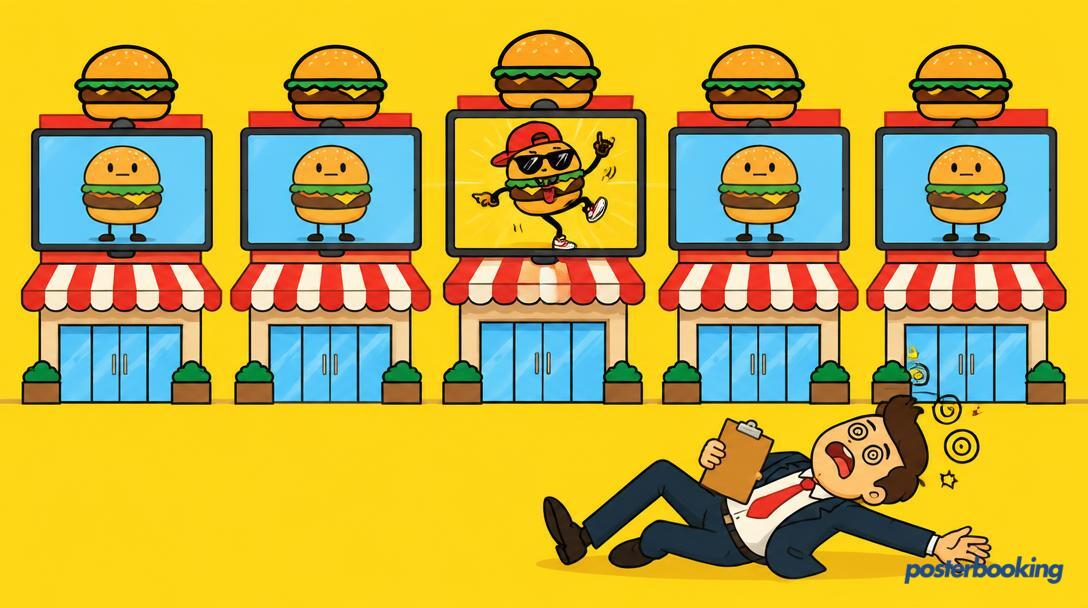
Managing a franchise is a bit like conducting an orchestra where half the violinists have decided to improvise jazz and the percussionist is currently trying to eat his drumsticks. You have a brand to protect, a vision to uphold, and a group of franchisees who, while enthusiastic, occasionally feel that a hand drawn sign saying "Fish Friday" in neon green marker is a suitable addition to your sleek, minimalist interior design. This is where digital signage for franchises enters the room, wearing a tailored suit and carrying a clipboard of absolute order.
The challenge is unique. You need a system that ensures the customer in London sees the same high quality promotions as the customer in Edinburgh, yet you also need to allow the Edinburgh manager to promote the local "Haggis Special" without having to call head office for permission every Tuesday morning. It is a delicate balance of centralized authority and local autonomy. If you get it right, your brand looks professional, cohesive, and modern. If you get it wrong, you end up with a fragmented mess that confuses customers and dilutes your hard earned brand equity.
In this guide, we will explore how digital signage for franchises solves these problems, how to manage the logistical nightmare of a multi location rollout, and how you can actually get started for free without having to sell a kidney to fund the software. We will delve into the nitty gritty of brand control, the psychology of why digital menus work so well, and the cold, hard numbers of why printing posters is a fool's errand in the twenty first century.
Contents
The Franchise Dilemma: Control vs. Chaos
The core of the franchise model is replicability. A customer walks into a franchise because they know exactly what they are going to get. They expect the same burger, the same haircut, or the same gym experience regardless of the post code. This expectation extends to the visual environment. When the marketing materials at one location look like they were designed by a professional agency and the materials at another look like they were a weekend project for a nephew who "knows a bit about computers," the brand suffers. This is not just a minor aesthetic gripe; it is a fundamental breakdown of the franchise promise.
The Importance of Brand Consistency
Brand consistency is not just about vanity. It is about trust. When a brand presents itself consistently across all touchpoints, it signals reliability and professionalism. For a franchise, this means every screen in every location must adhere to the brand guidelines: the correct logos, the specific hex codes for colours, and the approved fonts. Digital signage for franchises ensures that these assets are managed from a single source of truth. You no longer have to hope that the franchisee remembered to take down the Christmas promotion in mid February. You can simply turn it off from your desk at head office while sipping a cup of tea and wondering why anyone would ever use Comic Sans in a professional setting.
Consistency also streamlines the customer journey. If a customer is familiar with your digital layout in Leeds, they will feel immediately comfortable in your Bristol branch. They know where to look for the prices, where to see the daily specials, and where the nutritional information is displayed. This familiarity reduces cognitive load and makes the purchasing process smoother, which, as we all know, leads to more sales and fewer confused faces at the counter.
The Local Autonomy Requirement
On the flip side, being too restrictive can stifle local success. Every location has its own quirks. Perhaps the franchise in a university town needs to run student discounts, while the one in a business district focuses on quick lunch deals. If the head office controls every single pixel, the local manager loses the ability to respond to their specific market. The goal is to provide a framework where the brand stays intact, but the local manager has enough room to breathe and, more importantly, sell.
Franchisees are, by their nature, entrepreneurs. They have invested their own capital and time into the business. If you treat them like glorified vending machine fillers, you will breed resentment. By giving them controlled access to their digital signage, you empower them to use their local knowledge to drive sales. They know that the local high school has a sports day coming up; they should be able to put up a supportive message and a "refuel here" offer without having to navigate a six week corporate approval process.
Avoiding the Rogue Poster Incident
We have all seen it: the poorly photocopied A4 sheet taped to a glass door with bits of yellowing sticky tape. It is the natural enemy of brand standards. Digital signage for franchises eliminates the need for these rogue posters by providing a digital alternative that is just as easy to deploy but looks a thousand times better. By giving franchisees a designated "local zone" on their screens, you satisfy their need to communicate local information without compromising the aesthetic of the entire establishment.
Imagine a world where the only thing on your shop front windows is professional, high resolution imagery, rather than a collection of curling paper notices about lost cats and local choir rehearsals. That is the world digital signage promises. It is about maintaining a "premium" feel across the entire network, regardless of how "creative" an individual store manager might be feeling on a Tuesday morning.
Why Digital Signage for Franchises is the Ultimate Solution
Traditional print marketing is a slow, expensive, and environmentally questionable way to run a franchise network. By the time the new posters have been designed, approved, printed, and couriered to fifty different locations, the promotion is halfway over. Then you have to trust that fifty different managers actually bothered to put them up correctly, rather than leaving them in the cardboard tube in the back office because they were "too busy with the stock take."
Instant Global Updates
With a digital system, the time between "we have a new product" and "the product is on every screen in the country" is measured in seconds, not weeks. If the CEO decides that the colour blue is no longer in fashion and we are now a "green brand," the change can be pushed out instantly. This agility is a massive competitive advantage in a fast moving market. It allows franchises to react to events in real time: a sudden heatwave can trigger an ice cream promotion across the entire network before the sun has even come out properly.
This instant update capability also applies to crisis management. If a product needs to be withdrawn or a price needs to be corrected due to a typo, you can fix it globally in an instant. In the print world, a price error on a thousand posters is a catastrophic expense. In the digital world, it is a five second fix. This level of control is intoxicating for brand managers who have spent years chasing store owners to fix minor errors.
Scheduled Content Perfection
Franchise operations are busy. The last thing a manager wants to do is remember to change the breakfast menu to the lunch menu at 11:00 AM while they are also trying to manage a queue of hungry customers and a broken coffee machine. Digital signage for franchises allows for sophisticated scheduling. You can set the screens to change automatically based on the time of day, the day of the week, or even the weather.
This "set it and forget it" approach ensures that the right message is always in front of the right customer without any manual intervention. You can plan your entire marketing calendar months in advance. Valentine's Day, Mother's Day, and the summer bank holiday can all be programmed into the system in January. When the day arrives, the screens update themselves, leaving the franchise staff to focus on serving customers rather than faffing about with posters.
Reduced Printing Costs (and Guilt)
The cost of printing large format posters for a franchise network is staggering. When you add in the logistics of shipping, the carbon footprint of the delivery vans, and the inevitable waste when promotions change, the financial and environmental impact is significant. Digital signage is a one time hardware investment followed by negligible operating costs. Over a three year period, the savings on print alone usually pay for the entire digital signage system several times over. Plus, you get to feel slightly better about not chopping down quite so many trees just to tell people that you have a new flavour of muffin.
In an era where corporate social responsibility is high on the agenda for both customers and investors, moving away from wasteful print is a strong signal of modern, sustainable business practices. It is a rare win-win situation where you save money and improve your brand's environmental credentials at the same time.
Centralised Brand Control Meets Local Flexibility
The "holy grail" of franchise management is the ability to control the brand centrally while allowing for local input. Modern digital signage software achieves this through a combination of smart templating and robust user permissions.
Master Templates and Brand Guidelines
Instead of sending out static image files, head office can create dynamic templates. These templates define which parts of the screen are "locked" (like the logo, the background, and the primary offer) and which parts are "editable" (like the price of a coffee, the name of the "Employee of the Month," or the date of a local event). This ensures that even if a franchisee changes the text, the font remains correct, the spacing is perfect, and the brand identity is preserved.
It is brand management with training wheels, and it works brilliantly. It removes the risk of a well meaning but design challenged manager using a font that looks like it belongs on a child's birthday card. By providing high quality templates, you give them the tools to look professional, which in turn makes them more likely to use the system rather than going rogue with their own designs.
Defining User Permissions
Not all users are created equal. In a franchise setting, you might have a "Super Admin" at head office who can see every screen in the network, a "Regional Manager" who oversees ten locations, and a "Store Manager" who only has access to the screens in their specific shop. Digital signage for franchises allows you to set these permissions with precision.
You can decide exactly what a local manager can and cannot do. Can they upload their own photos? Maybe. Can they change the corporate video? Absolutely not. Can they adjust the volume of the audio? Perhaps, but only within a certain range. This granular level of control ensures that the system is used correctly and prevents accidental (or intentional) deviations from the brand standards.
The Art of the Approval Workflow
For larger franchises, an approval workflow is essential. A store manager can create a new promotion using an approved template, but it does not go live on the screen until it has been "ticked off" by someone at head office or a regional manager. This provides a safety net that prevents typos, inappropriate content, or accidental price mistakes from reaching the public eye.
It is the digital equivalent of having a very fast, very efficient proofreader sitting in every store. It also provides a clear audit trail. If something goes wrong, you can see exactly who created the content and who approved it. This accountability is vital for maintaining standards in a large, distributed organization.
Digital Menu Boards: The Heart of Franchise Operations
For food and beverage franchises, digital menu boards are no longer a luxury; they are a necessity. They do more than just show prices; they act as a silent salesperson that never takes a break, never gets grumpy on a Monday morning, and never forgets to mention the upsize option.
Dynamic Pricing Strategies
Prices for ingredients fluctuate. In a traditional print environment, changing a price means a new set of menus for every store. With digital menu boards, you can adjust prices across the entire franchise network in a few clicks. You can also implement "happy hour" pricing, "student Tuesday" deals, or "dynamic pricing" based on demand, all controlled from a central dashboard.
This flexibility is crucial for maintaining margins in a volatile economy. If the price of avocados suddenly spikes, you can adjust your guacamole surcharge instantly across all locations, protecting your bottom line without having to wait for a printing press to start rolling.
Compliance and Nutritional Labelling
Legislation regarding calorie counts and allergen information is becoming increasingly strict, particularly in the UK. Keeping up with these changes across a franchise network is a compliance nightmare if you are using printed menus. Digital signage for franchises allows you to update nutritional information instantly across all locations, ensuring you stay on the right side of the law without the stress of a massive reprinting exercise.
Being transparent about allergens is not just a legal requirement; it is a way to build trust with your customers. A digital screen can easily toggle between a standard menu and an allergen specific menu, providing a better service for customers with dietary restrictions without cluttering the main display.
Upselling Without the Awkwardness
A well designed digital menu board uses motion and high quality imagery to draw the eye to high margin items. A subtle animation of steam rising from a cup of coffee or a close up of a sizzling burger is far more effective at driving sales than a static photo. You can program the screens to promote specific add ons during the checkout process, increasing the average transaction value without the staff having to deliver a scripted sales pitch that they probably hate anyway.
Studies have shown that customers are more likely to accept an upsell suggestion from a screen than from a person, possibly because the screen doesn't make them feel pressured or judged. By using digital signage to handle the "suggestive selling," you free up your staff to focus on providing great service and getting the orders out quickly.
The Psychology of Screen Placement in Franchises
Where you put your screens is just as important as what you put on them. You could have the most beautiful, high budget content in the world, but if the screen is tucked away behind a potted plant or mounted so high that customers have to strain their necks to see it, you are wasting your money.
The Power of the Pavement
External facing screens are your digital hook. They need to be bright enough to be seen in direct sunlight and have content that is simple and high impact. The goal here is not to give the customer a full history of your brand, but to give them a reason to walk through the door. A rotating display of your best selling items or a "limited time only" offer is perfect for this. Think of it as your digital shop window that can change its display every thirty seconds.
The Dwell Time Zones
Once the customer is inside, you have different zones to play with. In the "waiting zone" (like a queue or a waiting area), customers have a high "dwell time." This is the place for longer form content: videos showing your brand story, testimonials, or detailed information about your products. This content entertains the customer, making the perceived wait time feel shorter, and educates them at the same time.
In the "point of sale zone," however, the dwell time is low. Here, the content needs to be punchy and focused on upselling. A quick animation of a side dish or a premium drink option is all you need. You don't want to distract them from the actual transaction; you just want to give them one last nudge to spend a little bit more.
Avoiding Screen Fatigue
It is possible to have too much of a good thing. If every square inch of your franchise is covered in screens, the environment becomes overwhelming and stressful. The goal is "informed elegance," not "digital bombardment." Use screens strategically to enhance the environment, not to dominate it. Consider the audio as well: if your screens are making noise, make sure it doesn't clash with the background music or make it impossible for staff to hear customers.
Rolling Out Digital Signage Across Your Franchise Network
Rolling out hardware to dozens or hundreds of locations is a logistical challenge that requires the kind of planning normally reserved for military operations. You cannot just wing it and hope for the best. You need a strategy, a checklist, and a very large amount of patience.
The Pre-Rollout Audit
Before you buy a single screen, you need to know what you are working with. Do all your locations have reliable Wi-Fi? (Spoiler: they probably don't). Are there power outlets near the proposed screen locations? Is the wall strong enough to hold a 55 inch display, or is it made of something that will crumble the moment a drill touches it?
Conducting a thorough audit of every site will prevent expensive surprises during the installation phase. It is much cheaper to find out now that a store needs a new router than it is to have an installer standing around at fifty pounds an hour waiting for a signal that isn't coming. This audit should also include measurements for cable runs and photos of the proposed mounting areas for the central design team to review.
Hardware Selection for Longevity
It is tempting to go to the local electronics store and buy the cheapest consumer TVs you can find during a Black Friday sale. Do not do this. Consumer TVs are not designed to run for twelve to sixteen hours a day, seven days a week. They will burn out, the colours will fade, and their warranties will be void the moment the manufacturer realizes they were used in a commercial environment.
Invest in commercial grade displays. They are brighter, more durable, and often come with three year onsite warranties. For the "brains" of the operation, using affordable devices like an Amazon Fire Stick or a dedicated Android media player is a cost effective way to get PosterBooking running on any screen with an HDMI port. This approach allows you to spend your money where it counts (on the glass) while keeping the player costs low.
A Step-by-Step Rollout Checklist
- Pilot Program: Start with two or three locations. Test everything: the software, the hardware, the franchisee feedback, and the customer reaction. Fix the bugs here before scaling. It is much easier to fix a problem in three stores than in three hundred.
- Training: Create simple, jargon free training materials for your franchisees. A video tutorial is often better than a fifty page manual that no one will read. If the software is easy to use (which PosterBooking is), this should be a short process.
- Staged Implementation: Do not try to do every store in one weekend. Roll it out region by region. This allows your support team to handle any teething issues without being overwhelmed.
- Content Migration: Ensure that all your existing brand assets are digitised and ready to go before the screens are turned on. A blank screen or a "No Signal" message is a wasted opportunity and looks terrible for the brand.
- Feedback Loop: After the rollout, ask the franchisees what is working and what is not. They are on the front lines and will have insights that head office might miss. Maybe the screen in the front window is reflecting the afternoon sun too much? You won't know unless you ask.
Measuring Success and Brand Consistency
How do you know if your investment in digital signage for franchises is actually working, or if it is just a very expensive way to make your walls look "techy"? You need data, not just gut feelings.
Monitoring Screen Uptime
The most basic metric is uptime. If a screen is off, it is not making money; it is just a black rectangle on the wall. Modern signage platforms like PosterBooking allow head office to see a status report of every screen in the network. If a screen in Bristol goes offline, you should know about it before the manager there even notices. This proactive monitoring ensures that your message is always being delivered and allows you to troubleshoot remotely, saving on expensive site visits.
Content Performance Tracking
While it is harder to track "clicks" on a physical screen, you can correlate sales data with the content being shown. This is where your POS (Point of Sale) system becomes your best friend. If you run a promotion for a specific smoothie on the digital boards and sales of that smoothie jump by twenty percent compared to stores that are not running the promotion, you have a clear indicator of success.
This data allows you to refine your content strategy over time. You might find that video works better for burgers, but static images work better for coffee. You can then push these "best practices" out to the rest of the network, ensuring everyone benefits from the insights gained in a few stores.
Regular Brand Audits
Digital signage makes brand audits much easier. Instead of physically visiting every store and checking their posters, a brand manager can log into the central dashboard and see exactly what is playing on every screen at that exact moment. This "virtual walkthrough" ensures that franchisees are sticking to the plan and that the brand remains consistent across the entire network.
It also allows you to catch those "rogue" pieces of content before they do too much damage. If you see a store manager has uploaded a photo of their new puppy to the main menu board, you can politely (or firmly) remove it and give them a quick refresher on the brand guidelines.
The Financials: Cost Ranges for Franchise Digital Signage
Budgeting for a franchise wide rollout requires looking at both the initial capital expenditure (CapEx) and the ongoing operational costs (OpEx). While we cannot give you an exact quote without knowing if you are a local bakery or a global chicken empire, we can provide some broad ranges to help you plan.
Initial Hardware Investment
A commercial grade 43 to 55 inch display will typically cost between four hundred and eight hundred pounds, depending on the brand and features like brightness and bezel width. You will also need a mount (fifty to one hundred pounds) and a media player. If you use a device like a Fire Stick, that is another forty to sixty pounds. If you go for a high end, dedicated digital signage player with extra processing power, you could be looking at two hundred pounds or more per screen.
Multiply these figures by the number of screens per store and then by the number of stores, and you have your baseline hardware cost. It is a significant investment, but one that is designed to last for several years.
Professional Services and Installation
Unless your franchisees are particularly handy with a drill and a level (and have a good insurance policy), you will need professional installation. Budget between one hundred and fifty and three hundred pounds per screen for installation, depending on the complexity of the mount and the wiring required.
You should also factor in the cost of content creation. If you don't have an in house design team, you might want to budget for a professional agency to create your initial set of templates and high quality animations. Good content is what makes the screens effective; don't spend all your budget on the hardware and then have nothing left to make it look good.
Software Subscriptions and Hidden Fees
Many digital signage companies charge per screen, per month. These costs can range from ten to thirty pounds per screen. For a franchise with a hundred screens, this adds up to thousands of pounds every single month. This is where PosterBooking becomes particularly attractive for franchises, as you can get your first ten screens up and running for free, allowing you to prove the value of the system before committing to a larger budget.
Watch out for hidden fees too: some providers charge extra for data storage, technical support, or "premium" features like scheduling or user permissions. PosterBooking keeps it simple, which is exactly what a busy franchise owner needs.
PosterBooking for Franchises: Start Small, Scale Big
We understand the unique pressures of the franchise world. You need a system that is powerful enough for a global brand but simple enough for a local store owner to use without a PhD in computer science. You need reliability, scalability, and, above all, value for money.
Why First 10 Screens Free is a Game Changer
For a franchise, the "first 10 screens free" offer is more than just a bargain. It is a risk free way to pilot the technology. You can set up a handful of stores, test different content strategies, and see the results for yourself without having to get a large budget approved by the board of directors who are still suspicious of "this whole internet thing."
Once you have proven the ROI, scaling up to the rest of the network is a simple process. You already know how it works, you know what content your customers like, and you have ironed out the logistical kinks. It is the smartest way to modernise a franchise network without betting the farm on an unproven solution.
Setting Up Your First Franchise Location
Getting started is remarkably simple. You just need a screen with an HDMI port and a basic internet connection. You install the PosterBooking app on your media player, enter the code on our website, and you are ready to start uploading content.
You can organize your screens into groups, so you can manage "London Stores" or "Coffee Shops" as a single entity, making it easy to push updates to multiple locations at once. The interface is clean, fast, and does exactly what it says on the tin. No clutter, no confusing jargon, just simple, effective digital signage management.
Scaling to Thousands of Screens
As your franchise grows, PosterBooking grows with you. Our platform is designed to handle large networks with ease. You can add hundreds or even thousands of screens to your account, manage complex user permissions, and schedule content months in advance.
Because we support affordable hardware like the Fire Stick, the cost of scaling your network remains manageable, allowing you to focus your budget on what really matters: creating great content, serving your customers, and growing your business. We take care of the technical side, providing a stable, reliable platform that lets your brand shine.
Frequently Asked Questions
Can I allow franchisees to upload their own content?
Yes, you can, and you probably should. With PosterBooking, you can set specific user permissions that allow franchisees to manage certain areas of their screens while keeping other areas locked by head office. This provides the perfect balance of central control and local flexibility. For example, you might let them update the "Daily Special" text but not the background image or the corporate logo. This ensures that the brand is protected while the local manager can still respond to their local market and feel a sense of ownership over their store's appearance.
What happens if the internet goes down at a franchise location?
The screens will keep running like nothing happened. PosterBooking is designed to be resilient. It downloads all the content and scheduling data to the local media player. If the Wi-Fi drops out, the player just keeps playing what it has already downloaded. The only thing you will not be able to do is update the content or change the schedule until the internet connection is restored. Once it comes back online, the player will automatically check in, download any new updates, and carry on as normal. This ensures that your business never looks "broken" to your customers.
Do I need to buy expensive, specialized hardware?
No. One of the biggest advantages of PosterBooking is its hardware agnosticism. It runs on very affordable, off the shelf hardware. You can use an Amazon Fire Stick, a Chromecast with Google TV, or almost any Android based media player. This significantly lowers the barrier to entry for franchises and makes it much cheaper to replace hardware if a device fails. You don't need a three thousand pound specialized "signage computer" hidden in the ceiling; a fifty pound stick plugged into the back of the TV will do the job perfectly well.
How do I ensure all my stores are showing the right content?
You can monitor every screen in your network from the central PosterBooking dashboard. The system gives you a "bird's eye view" of your entire estate. You can see which screens are online, what content they are currently playing, and when they last updated. This gives head office complete visibility and peace of mind. If a store is playing old content or the screen is turned off, you will see it immediately on your dashboard, allowing you to call the manager and ask them what on earth they think they are doing (in the nicest possible way, of course).
Can I schedule different menus for different times of the day?
Absolutely. Scheduling is one of the most powerful features for franchises, especially in the food and beverage sector. You can set your breakfast menu to appear at 6:00 AM, switch to lunch at 11:00 AM, and move to a dinner or evening menu later in the day. You can also schedule specific promotions for weekends, bank holidays, or special events like the World Cup. All of this happens automatically once you have set the schedule, so your staff can focus on the customers instead of worrying about what is on the screens.
Is the software difficult for non technical staff to use?
Not at all. We have designed the interface with the "busy store manager" in mind. It is intuitive, straightforward, and requires zero coding skills. If a store manager can upload a photo to social media or send an email, they can use PosterBooking. This reduces the amount of training required during the rollout and ensures that your digital signage remains a helpful tool for the business rather than a technical burden that everyone tries to avoid using.
Is it really free for the first 10 screens?
Yes, it really is. We are not interested in bait and switch tactics or hidden catches. We believe that once you see how easy and effective our platform is, you will want to use it for your entire network as you grow. The first ten screens are FREE! * with no credit card required and no complicated contracts. You can get started today, set up a few screens in your office or a pilot store, and see the benefits of digital signage for franchises for yourself.
Digital signage for franchises is no longer an optional extra; it is a fundamental tool for brand management and sales growth in the modern world. By combining the power of centralized control with the flexibility of local input, you can ensure that your brand remains strong, consistent, and profitable across every location you open. Whether you are managing three stores or three thousand, the principles remain the same: protect the brand, empower the managers, and keep the customers engaged. With the right strategy and the right platform, your franchise network will not just survive; it will thrive in the digital age.
FREE! *