
The Ultimate Guide to DOOH Audience Measurement in 2026
Table Of Contents
DIGITAL SIGNAGE RESOURCES
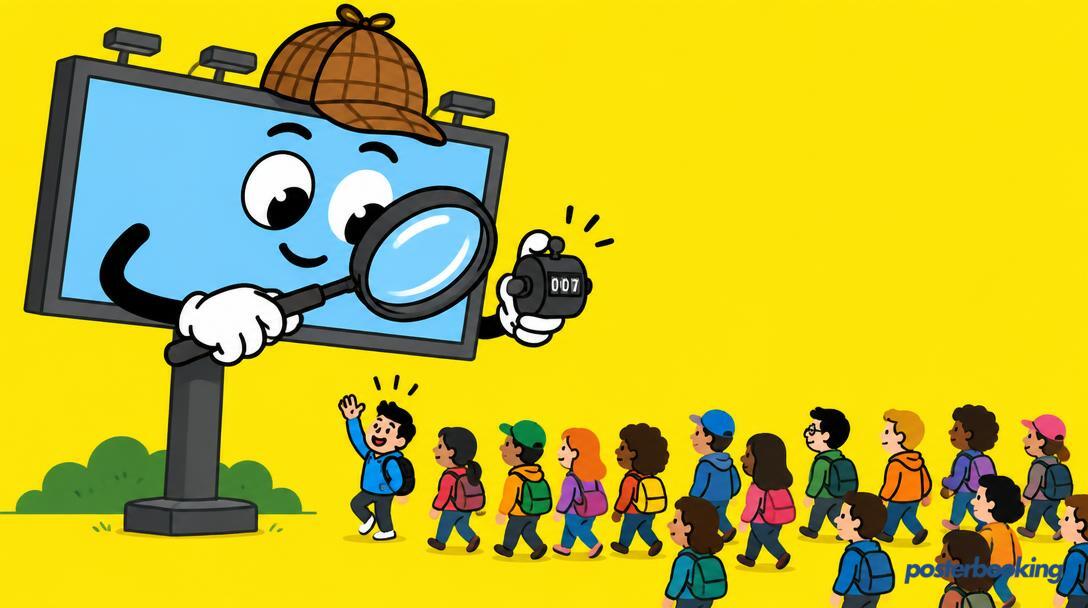
If you have ever stood in front of a digital billboard wondering if anyone is actually looking at it, or if they are just staring blankly into the middle distance while waiting for a bus, then you have already encountered the central problem of modern advertising. In the old days, we used to call this "shouting at walls". You paid a lot of money, stuck a poster on a wall, and hoped for the best. Today, that approach is about as useful as a chocolate teapot. We have entered the era of DOOH audience measurement, where data reigns supreme and guessing is strictly for people who enjoy losing money.
This guide will take you through everything you need to know about measuring who sees your digital signage in 2026. We will look at why advertisers are no longer satisfied with "proof of play", the various technologies used to track humans (in a non-creepy way, mostly), and how you can get started without needing a budget the size of a small nation state. Digital Out of Home (DOOH) has transformed from a passive medium into an interactive, data-driven powerhouse, and understanding the measurement piece of the puzzle is the only way to stay competitive.
Contents
What is DOOH Audience Measurement?
DOOH audience measurement is the process of using technology to quantify exactly how many people have seen your digital out-of-home content. In the past, we relied on "estimated traffic counts" provided by local councils who basically stood on a corner for ten minutes in 1994 and multiplied the result by thirty years. As you can imagine, this was not exactly scientific. It was more of an educated guess wrapped in a layer of marketing optimism.
In 2026, audience measurement has evolved into a sophisticated blend of hardware and software. It is no longer just about how many people walked past a screen. It is about how many people looked at it, how long they looked at it, and whether they actually cared. This involves a mixture of real-time sensing, historical data analysis, and predictive modelling.
The Evolution of the Billboard
We have moved from static posters that sat there gathering dust to dynamic, internet-connected screens. Because these screens are smart, we expect the reporting to be smart too. If you are using * to run your screens, you already have the delivery side sorted. But the measurement side is what tells you if your content is actually doing its job or if you are just illuminating a dark alleyway for no reason. A screen without measurement is like a salesman who speaks into a telephone that isn't plugged in. It feels productive, but it achieves absolutely nothing.
Why Data is the New Currency
In the modern advertising landscape, data is everything. If you cannot prove that 5,000 people saw an ad for a vegan sausage roll between 8:00 AM and 9:00 AM, the sausage roll company is going to take their money elsewhere. Audience measurement provides the "receipts" for the marketing spend. It turns digital signage from a decorative expense into a measurable sales engine. Advertisers are no longer buying "pixels on a screen"; they are buying "verified eyeballs". If you can't provide the data, you can't justify the price.
The Role of Programmatic DOOH
The rise of programmatic DOOH has further accelerated the need for measurement. In a programmatic environment, screens are bought and sold in real-time based on the audience currently standing in front of them. If a group of wealthy commuters is detected near a screen at a train station, the system might automatically bid to show an ad for a luxury car. Without instant dooh audience measurement, this level of automation simply wouldn't work.
Proof of Play vs Proof of Audience
This is a distinction that trips up a lot of people. If you are new to the world of *, listen closely, because this could save you a lot of awkward conversations with clients.
What is Proof of Play?
Proof of play (PoP) is the digital signage equivalent of saying, "I did my homework, I swear." It is a log generated by the media player that proves a specific file was played at a specific time for a specific duration. It confirms that the screen was on, the software was running, and the ad was technically visible to the world. It is the absolute bare minimum requirement for any digital signage network.
While PoP is essential for billing, it is not the whole story. You could play an ad for a luxury watch on a screen inside an empty cupboard, and the PoP report would look perfect. The problem, obviously, is that no one saw it. The client would be rightfully annoyed if they paid for 10,000 plays and got zero sales because the screen was facing a brick wall or hidden behind a stack of crates.
Why Advertisers Demand Proof of Audience
Proof of audience (PoA) is what happens when you combine PoP with actual human interaction data. Advertisers in 2026 are demanding PoA because they are tired of paying for "opportunity to see" (OTS). They want "visibility adjusted contacts" (VAC). They want to know that a human being with two eyes and a brain actually acknowledged the content. PoA bridges the gap between "the ad was there" and "the ad was seen".
The Shift to Outcome-Based Pricing
We are seeing a massive shift towards outcome-based pricing. Some premium networks are even moving towards a "pay-per-look" model, similar to pay-per-click in online advertising. Without robust dooh audience measurement, this level of precision is impossible. If you want to play with the big boys, you need more than just a playlog; you need a headcount. This transparency builds trust, and trust is what allows you to charge higher rates for your advertising space.
Core Methodologies of Measurement
So, how do we actually count these people? Short of hiring a man in a high-vis vest to stand next to the screen with a clicker (which is expensive and remarkably creepy), we have four main ways of doing it.
Computer Vision and AI Sensors
This is the "gold standard" of DOOH audience measurement. Small sensors (essentially smart cameras) are mounted on or near the screen. These sensors use AI to detect human faces. Note that in 2026, these sensors do not "record" video or "identify" individuals (which would be a privacy nightmare). Instead, they process the image locally (on the edge) and turn it into anonymous data points. They look for the geometry of a face, the distance between eyes, and the direction of the gaze. If the gaze is directed at the screen for more than two seconds, it counts as a view.
Mobile Location Data
This is the most common method for large-scale outdoor billboards. By tapping into aggregated and anonymised GPS data from mobile phones, companies can estimate how many people moved through a "geofence" around a screen. This data often comes from third-party providers who aggregate info from thousands of different mobile apps. While it lacks the "eye-tracking" precision of computer vision, it is excellent for understanding broad traffic patterns and the socio-economic profile of the people passing by. It can tell you, for example, that the people seeing your billboard at 9:00 AM are mostly office workers, while those at 3:00 PM are mostly students.
WiFi and Bluetooth Sniffing
Every smartphone is constantly screaming "Hello! Is there a WiFi network here?" into the void. By placing a small WiFi sensor near your screen, you can detect these "pings". This allows you to see how many unique devices passed by and, more importantly, how many of them returned later (loyalty measurement). It is a bit less precise than computer vision because some people might have two phones, while others might have their WiFi turned off. However, it is much cheaper to implement and provides great data on "dwell time" in environments like shopping centres or waiting rooms.
Sales Lift and Attribution Studies
The most direct way to measure if your signage is working is to look at the till. If you run a promotion for a "Mid-Morning Muffin" on your * screens and muffin sales go up by 20%, you have your measurement. In 2026, we use sophisticated algorithms to correlate playlogs with point-of-sale (POS) data to prove "sales lift". This is the ultimate metric for retailers. They don't care about "impressions" nearly as much as they care about "sold muffins". By comparing a "control" store (no screens) with a "test" store (with screens), you can isolate the exact impact of your digital signage.
The Metrics That Actually Matter
If you start looking at an audience measurement dashboard, you will be hit with a wall of acronyms. Here is what you actually need to care about to avoid looking like a confused amateur.
Impressions and Reach
An "impression" is a single instance of a person seeing your content. "Reach" is the total number of unique people who saw it. If Dave walks past your screen five times a day, that is five impressions but a reach of one. Advertisers love reach, but they also value frequency. Dave seeing it five times makes him more likely to buy the thing, but if you only reach Dave, you aren't going to get very far. Balancing reach and frequency is the secret sauce of media planning.
Dwell Time vs Attention Time
Dwell time is how long a person was in the vicinity of the screen (e.g., waiting for their coffee). Attention time (or "dwell on ad") is how long they actually looked at the screen. This is a critical distinction. If someone is standing in a queue for three minutes (dwell time) but only glances at your screen for three seconds (attention time), you need to know that. It tells you your content might be boring or poorly placed. If your attention time is low, you might need to make your graphics more eye-catching or move the screen to a more natural eye-level.
Glances and Engagement Rate
A "glance" is a brief look, usually under one second. "Engagement" is a more prolonged look. The engagement rate is the percentage of people who were in the vicinity and actually bothered to look at the screen. If 1,000 people walk past and only 10 look at the screen, your engagement rate is 1%. That is a sign that you are either showing the wrong thing to the wrong people, or your screen is so poorly positioned that it has become part of the furniture.
Demographics and Sentiment
Modern computer vision can estimate the age, gender, and even the mood of the viewer. While this sounds like science fiction, it is incredibly useful for refining your creative strategy. If your ad for "Extreme Sports Gear" is mostly being watched by 70-year-old grandmothers who look confused, you might want to rethink your targeting. Sentiment analysis (detecting smiles, frowns, or boredom) can tell you how people are reacting to your content in real-time. If people are frowning at your "Big Sale" announcement, maybe the prices aren't as good as you thought.
Privacy, GDPR, and the Ethics of Tracking
We cannot talk about dooh audience measurement without talking about the "creepy factor". No one wants to feel like they are being stalked by a billboard, and in 2026, the public is more aware of data privacy than ever before.
The Importance of Anonymisation
The key to ethical measurement is that the data must be anonymised at the source. The sensors should not save images. They should see a face, turn it into a string of numbers (e.g., "Male, 25-30, Happy"), and then immediately delete the visual data. This is what we call "Privacy by Design". The raw video feed should never even touch a hard drive. It should be processed in the RAM and then discarded. This ensures that even if someone hacked the sensor, they would find absolutely no images of people.
Staying GDPR Compliant
If you are operating in the UK or EU, GDPR is your best friend and your worst enemy. To stay compliant, you must ensure that your measurement provider does not collect Personally Identifiable Information (PII). You should also place small notices near the screens informing the public that anonymous sensing is in use. A small icon or a line of text in the corner of the screen is usually sufficient. Most people don't mind being a statistic; they just mind being a target. Transparency is the best way to avoid a PR disaster.
The "Creepy" Threshold
There is a fine line between "relevant advertising" and "stalking". In 2026, the industry has largely agreed that we should not use facial recognition to identify specific people (e.g., "Hello, Mr. Jones, would you like another latte?"). That is the quickest way to get your screen smashed with a brick or your business sued into oblivion. Stick to aggregate data and everyone stays happy. Use the data to understand "who" the audience is in general, not "who" a specific individual is.
The Cost of Measuring Screens
"This sounds expensive," I hear you cry. Well, it can be, but it doesn't have to be. You don't need a Silicon Valley budget to start getting insights.
Entry-Level Costs
If you are a small business using * for your signage, you probably aren't going to spend £10,000 on a laser-guided audience tracking system. Entry-level solutions, like basic WiFi sniffing or simple PIR sensors (the same ones that turn on your porch light), can cost as little as £50 to £200 per screen as a one-off hardware cost. While they won't tell you the gender of your customers, they will give you a good idea of foot traffic and peak hours.
Professional Grade Systems
For high-traffic retail environments, you are looking at dedicated AI sensors like those from Quividi or SeeSignage. These usually involve a hardware cost of £300 to £800 per unit, plus a monthly "insights" subscription that could range from £20 to £100 per month. You are paying for the software that turns raw data into pretty graphs that you can show your boss or your clients. These systems are incredibly powerful and can even be used to trigger specific content based on who is standing in front of the screen.
Data-Only Subscriptions
If you are using mobile location data for large outdoor screens, there is often no hardware cost at all. Instead, you pay a data provider for a report based on your screen's coordinates. These reports can cost anywhere from £50 to £500 depending on the detail and the duration of the study. This is a great way to get a high-level overview of your audience without having to install a single piece of extra equipment.
How to Start with PosterBooking
You might think that dooh audience measurement is only for the big players like Coca-Cola or Nike. That is absolute nonsense. Even a small cafe or a local hairdresser can benefit from knowing if their window display is actually drawing people in.
Start with the Basics
The first step is getting your screens up and running. With PosterBooking, your first 10 screens are free. This allows you to experiment with different content types without any financial risk. You can use the built-in reporting to see your Proof of Play, which is the foundation of all measurement. Before you worry about who is looking, you need to be 100% sure that your content is playing correctly.
Adding a Measurement Layer
Once you have your screens running, you can add a simple measurement tool. For example, you could include a unique QR code on your digital signage content. By tracking how many people scan that code using a tool like Google Analytics, you have a direct, low-cost way to measure engagement. It is not as fancy as an AI camera, but it is a bloody good start. You can even offer a discount to people who scan the code, which gives them a reason to interact with your screen.
Scaling Up
As your business grows, you can move into more advanced measurement. Because PosterBooking is compatible with a wide range of hardware (Android, Firestick, Windows), you can easily integrate third-party sensors alongside your media players. The flexibility of the platform means you aren't locked into one expensive ecosystem. You can start with a Firestick and a QR code, and eventually move up to a professional media player with a built-in AI sensor.
Future Trends in DOOH Measurement
As we look further into 2026 and beyond, the world of measurement is only going to get more interesting (and possibly a bit weirder).
AI-Generated Content Optimization
We are already seeing the first steps towards screens that change their own content based on real-time audience feedback. If the sensor detects that the audience is looking bored, the AI might automatically switch to a more energetic video or a different colour scheme. This creates a feedback loop where the measurement doesn't just report on the content, but actively improves it.
Integration with Wearables
With the rise of smart glasses and other wearables, we might soon see measurement that looks at the world through the user's eyes. Instead of a sensor on the screen looking at you, your own devices might report that you looked at a specific billboard. This would provide the ultimate "proof of audience", though it raises even more interesting privacy questions that we will probably be arguing about for the next decade.
Hyper-Local Weather and Event Correlation
We are getting better at correlating audience data with external factors. For example, measurement systems in 2026 can tell you exactly how a sudden rain shower affects the dwell time at your screens in a shopping centre. They can show you how a local football match impacts the demographics of the people passing your street-side screens. This allows for incredibly granular planning.
Frequently Asked Questions
What is the most accurate method for DOOH audience measurement?
Computer vision using AI sensors is generally considered the most accurate method. It provides real-time data on actual views, dwell time, and even facial expressions. Unlike mobile location data, which tells you someone was "near" the screen, computer vision confirms they were actually looking at it. It is the closest we can get to reading a viewer's mind without using actual telepathy.
Is audience measurement for digital signage legal in the UK?
Yes, it is perfectly legal, provided you comply with GDPR and the Data Protection Act 2018. The key is ensuring that the data collected is anonymous and that no images of faces are stored or transmitted. Most professional sensors process data "on the edge", meaning the video never leaves the device and is never seen by a human. It is purely mathematical.
Can I measure audience engagement without expensive cameras?
Absolutely. You can use "proxy" metrics like QR code scans, unique landing page URLs, or SMS short-codes. You can also look at "sales lift" by comparing your signage schedule with your daily sales reports. If sales of "Blue Widgets" spike every time the "Blue Widget" ad plays, you have proof of engagement. It is old-school, but it works brilliantly.
What is the difference between OTS and VAC?
OTS stands for "Opportunity to See", which is a fancy way of saying someone walked past the screen. VAC stands for "Visibility Adjusted Contact", which is a more realistic metric that accounts for the fact that not everyone who walks past a screen actually looks at it. VAC is always lower than OTS, but it is much more valuable because it represents actual attention rather than just physical proximity.
How does mobile location data work for billboards?
Mobile location data uses aggregated GPS, WiFi, and cellular signal data from millions of smartphones. By drawing a virtual box (a geofence) around a billboard, data providers can estimate how many people entered that box, how long they stayed, and how often they return. It is great for large-scale outdoor campaigns where installing cameras on every pole would be impractical.
Do I need a different media player for audience measurement?
Not necessarily. Many measurement sensors are standalone devices that sit next to your media player and work independently. However, some modern all-in-one "smart screens" have cameras built-in that can be used for measurement software. PosterBooking works with almost any hardware, so you have the freedom to choose the setup that fits your specific needs and budget.
Why should I use PosterBooking for my digital signage?
PosterBooking is ideal because it removes the barrier to entry. You get your first 10 screens for free, which includes all the essential "Proof of Play" reporting you need. It is easy to set up, works on cheap hardware like Firesticks, and gives you a professional platform to test your content before you invest in high-end audience measurement tools. It is the perfect starting point for any business looking to get serious about digital signage.
If you are ready to stop shouting at walls and start measuring your success, head over to * and get your first 10 screens set up today. It is a doddle, and your advertisers (and your bank account) will thank you for it.