
Projection Advertising: The 2026 Guide
Table Of Contents
- Understanding the Types of Projection Advertising
- Projectors vs Screens: Which is Right for Your Signage?
- Technical Mastery: Brightness, Lumens, and Ambient Light
- Permissions and Local Rules: Navigating the Legal Landscape
- Creative Ideas for Impactful Projection Campaigns
- Measuring the Results of Your Projection Advertising
- Running Projector Content with PosterBooking
- Frequently Asked Questions
DIGITAL SIGNAGE RESOURCES
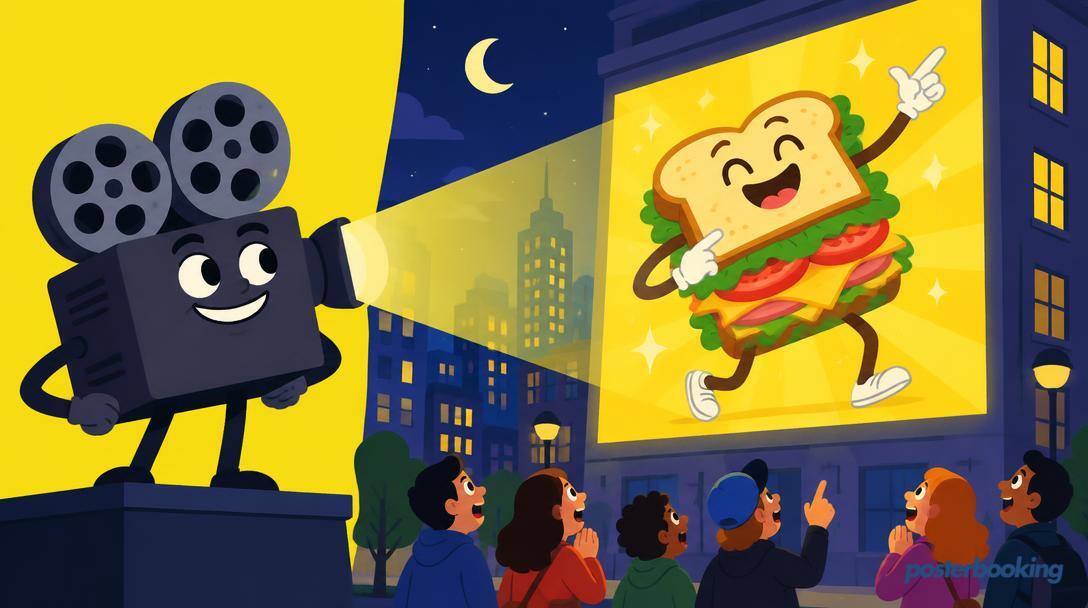
The world of advertising is no longer confined to the four corners of a plastic frame or the glowing rectangle of a television set. As we navigate through 2026, the physical environment itself has become the canvas. Projection advertising is the art and science of using light to transform everyday surfaces into dynamic, high impact displays. Whether it is a historical building being wrapped in a digital story or a simple shop window coming to life after dark, projection technology has moved from the niche world of art installations into the mainstream of marketing strategy.
This guide explores the current state of projection advertising, the technical requirements for success, and how you can leverage this medium using tools like PosterBooking to manage your content without needing a degree in optical physics. We will look at why light is often more powerful than glass and how to navigate the complex world of lumens, permissions, and creative execution.
The Evolution of the Projected Image
Projection is one of the oldest forms of visual storytelling, dating back to the camera obscura and magic lanterns. However, the modern iteration is a far cry from the flickering images of the past. Today, laser projection technology allows for incredible brightness, deep colour saturation, and thousands of hours of maintenance free operation. In a world where consumers are increasingly blind to traditional billboards, the sheer scale and novelty of a large scale projection can stop foot traffic in its tracks.
It is not just about size, though. It is about integration. Unlike a flat panel screen that sits on a wall, a projection conforms to the architecture it inhabits. It respects the textures of stone, the transparency of glass, and the contours of the landscape. This organic quality makes it feel less like an intrusion and more like an experience.
Contents
Understanding the Types of Projection Advertising
Projection advertising is a broad term that covers everything from a small logo on a pavement to a full scale takeover of a skyscraper. Understanding the different types is crucial for choosing the right equipment and strategy for your brand.
Building Projection Mapping
Building projection mapping is the heavyweight champion of the industry. It involves using specialized software to map the three dimensional geometry of a building so that the projected content can interact with its features. Windows become portals, columns appear to crumble, and the entire facade can seem to shift and move.
This is not just about throwing a flat image onto a wall. It is about using the architectural details as part of the narrative. For example, a luxury car brand might show a vehicle racing across the windows and around the balconies of a famous landmark. The complexity of mapping requires high end projectors and precise alignment, but the result is a spectacle that almost guarantees social media virality.
Window Projection and Rear Projection Film
For retailers, the shop window is the most valuable real estate. Traditional window displays are static and require manual updates. Window projection changes the game. By applying a thin, translucent rear projection film to the inside of the glass, the window becomes a giant digital screen.
The projector sits inside the shop, firing light onto the film. To someone standing outside, the glass appears to be a high definition display. The beauty of this method is that it is invisible when turned off, allowing the shop to maintain its standard look during the day. It is a cost effective way to create a large format display without the weight or installation headaches of a massive LED wall.
Floor and Gobo Projection
Sometimes, the most effective place to look is down. Floor projection is used frequently in shopping centres, museums, and event spaces to guide foot traffic or create interactive experiences. Interactive floor projections can react to the movement of people, creating a trail of light or a digital game that keeps children (and bored adults) entertained.
Gobo projection is a slightly simpler, older sibling. A gobo is a small stencil or slide placed inside a projector to cast a static logo or pattern onto a surface. While less dynamic than video projection, modern LED gobo projectors are incredibly sharp and efficient, making them perfect for projecting brand logos onto pavements outside a store or onto the floor of a lobby.
Interior and Atmospheric Projection
Projection is not just for the outdoors. Internally, brands use projection to create immersive environments. This might involve projecting textures onto products, creating moving backgrounds in a showroom, or using "holographic" mesh screens to create the illusion of 3 floating objects in mid air.
Atmospheric projection takes this a step further by projecting into fog or mist, creating a 3D volume of light. While perhaps a bit dramatic for your average fish and chip shop, it is a powerful tool for high end product launches and experiential marketing.
Projectors vs Screens: Which is Right for Your Signage?
When planning a digital signage rollout, the default choice is often a flat panel LCD or LED screen. However, projectors offer distinct advantages and a few notable drawbacks that must be weighed carefully.
The Question of Scale and Cost
One of the biggest advantages of projection is the cost per square inch. If you want a 150 inch display, a professional grade high brightness LCD screen will be prohibitively expensive and incredibly heavy. A projector, however, can easily create an image of that size for a fraction of the hardware cost.
In terms of physical footprint, projectors are also more flexible. You do not need to reinforce walls to hold hundreds of kilograms of glass and metal. You simply need a mounting point for the projector and a suitable surface to catch the light.
Aesthetics and Integration
Screens are, by their nature, obvious. They are black rectangles that sit on walls. Projection is discreet. When the projector is off, the wall is just a wall. This makes projection the preferred choice for historic buildings, art galleries, and high end boutiques where a giant television might ruin the interior design.
Furthermore, projection allows for non rectangular displays. You can project onto circles, triangles, or irregular shapes. You can even project onto spherical objects. If your brand identity is built on breaking the mold, a rectangular screen might feel a bit too restrictive.
Lifespan and Maintenance
Historically, projectors were seen as high maintenance due to the limited life of their lamps. However, the shift to laser light sources has largely solved this. Modern laser projectors can run for 20,000 to 30,000 hours without a significant drop in brightness. This puts them on par with many commercial grade screens.
The main maintenance concern for projectors is dust. Filters need to be cleaned regularly to prevent overheating. Screens, on the other hand, are susceptible to physical damage and "burn in" if static images are left on for too long. In a high traffic area, a projector safely mounted on a ceiling is often more secure than a screen within reach of the public.
Technical Mastery: Brightness, Lumens, and Ambient Light
If you take one thing away from this guide, let it be this: you cannot win a fight against the sun. Understanding the relationship between light and your environment is the difference between a stunning display and a washed out mess.
Measuring Lumens
Projector brightness is measured in ANSI lumens. For a small, dark room, a 3,000 lumen projector might be sufficient. For a shop window facing a street at night, you should be looking at 5,000 to 10,000 lumens. For large scale building mapping, it is not uncommon to see stacks of projectors producing 30,000 lumens or more.
The rule of thumb is that your projection needs to be significantly brighter than the ambient light hitting the surface. If you are projecting onto a white wall in a room with large windows during the day, the image will disappear. This is why most outdoor projection advertising happens after dusk.
Contrast and Surface Colour
The surface you project onto acts as the "black" in your image. If you project onto a white wall, your blacks will only ever be as dark as that wall is under the ambient light. This is why "high contrast" projection screens or films are often grey. They help to maintain deep black levels even when there is some light in the room.
If you are projecting onto a dark brick building, you will need significantly more power to make the colours pop, as the dark surface will absorb more of the light. Pre-testing your content on the actual surface is a non negotiable step in any professional projection project.
Throw Distance and Lens Ratios
Where you place the projector matters just as much as what projector you use. Every projector has a "throw ratio," which determines how far away it needs to be to create an image of a certain size.
Short throw and ultra short throw (UST) projectors are becoming increasingly popular for signage. These can be placed just centimetres away from the wall or window, projecting upwards or downwards at a sharp angle. This prevents people from walking in front of the beam and casting shadows on the content, which is a common problem with traditional long throw setups.
Permissions and Local Rules: Navigating the Legal Landscape
Before you fire up a 20,000 lumen laser and point it at the town hall, you need to consider the legal implications. Advertising regulations vary wildly between jurisdictions, but there are some common themes you should be aware of.
Light Pollution and Nuisance
Most cities have rules regarding light pollution. If your projection is so bright that it illuminates the interior of a nearby apartment building, you are going to have problems. Local councils often have "dark sky" policies or specific limits on the "candela per square metre" that a sign can emit.
There is also the concept of "nuisance." If your projection is deemed to be a distraction to drivers on a busy road, the police or transport authorities may have the power to shut it down immediately. Always check the line of sight from nearby roads and adjust the brightness or content accordingly.
Planning Permission and Heritage Buildings
In many UK jurisdictions, projecting onto a building is considered a form of "advertisement" and may require express consent from the local planning authority. This is especially true if the building is a listed heritage site.
Even if the projection is temporary, you may still need a permit. Some cities are very supportive of "light festivals" but much less supportive of a permanent Nike swoosh projected onto a cathedral. The key is to start the conversation with the local council early in the planning process.
Intellectual Property and "Guerilla" Projection
There is a long history of "guerilla projection" where brands project onto buildings without permission for a quick stunt. While this can generate a lot of buzz, it is legally risky. You could be sued for trespass or face heavy fines for violating advertising bylaws. Moreover, in the age of corporate social responsibility, being seen as a "light vandal" can sometimes backfire on a brand's reputation.
Creative Ideas for Impactful Projection Campaigns
The technical setup is the skeleton, but the content is the soul. Because projection is fundamentally different from a TV screen, your creative approach should reflect that.
Using Architecture as a Storyteller
Don't just project a video file. Create content that interacts with the surface. If there is a pipe running down the wall, make it look like a neon tube. If there is a window, make it look like something is living inside it. The most successful projection campaigns are those where the audience can't tell where the physical building ends and the digital projection begins.
Interactive "Shadow Play"
Use sensors or cameras to track the movement of people in front of the projection. As someone walks past, their shadow could trigger a change in the content. Perhaps their shadow "wipes away" a layer of digital dust to reveal a product underneath. This level of engagement turns a passive viewer into an active participant.
Seasonal Transitions
One of the great joys of projection is the ability to change the "skin" of a building instantly. You can make a storefront look like it is covered in ice during December, or like it is overgrown with lush tropical plants in July. This keeps the physical location feeling fresh and gives people a reason to return and see what has changed.
Social Media Integration
Create "Instagrammable" moments. People love to take photos of light displays. Include a hashtag in the projection, or better yet, pull in live social media posts from fans and project them onto the wall in real time. This creates a loop of engagement that extends far beyond the physical location of the projector.
Measuring the Results of Your Projection Advertising
Like any marketing spend, you need to know if it is working. Measuring the ROI of projection can be tricky because it is often an "awareness" play rather than a direct "conversion" play, but there are ways to track success.
Footfall Analysis and Dwell Time
Using anonymized mobile tracking data or simple infrared sensors, you can measure how many people passed by the projection and, more importantly, how long they stopped to look. If your "dwell time" increases significantly after the projection is installed, you know the creative is working.
Social Media Sentiment and Reach
This is perhaps the easiest metric to track for projection advertising. Monitor the use of your campaign hashtags and look for mentions of your location. The number of shares, likes, and comments on videos of your projection mapping will give you a clear indication of its viral reach.
QR Codes and Direct Response
While you don't want to clutter a beautiful projection with giant QR codes, placing them discreetly (perhaps on a nearby plaque or at the end of a video loop) can allow you to track direct conversions. You can offer a special discount code that is only available via the projection, giving you a clear link between the light display and a sale.
Running Projector Content with PosterBooking
You might think that running a complex projection campaign requires an army of technicians and a rack of expensive servers. For many applications, that simply isn't true. PosterBooking makes it remarkably easy to manage projected content.
The Hardware Setup
All you need is a projector with an HDMI input and a simple media player, such as an Amazon Firestick or an Android box. You plug the media player into the projector, connect it to the internet, and install the PosterBooking app.
Once the app is running, it will give you a unique code. You enter this code into your PosterBooking dashboard, and suddenly, your projector is a managed screen. You can be sitting at home in London and changing the content on a projector in Manchester with a few clicks.
Scheduling and Management
Signage is rarely a 24/7 affair, especially with projectors. You likely want your projection to turn on at sunset and turn off at midnight to save on power and equipment life. PosterBooking allows you to schedule your content precisely. You can set different loops for different times of day or even different days of the week.
If you have multiple projectors, you can group them together in the dashboard. This allows you to push a new holiday campaign to fifty different shop windows across the country simultaneously. It takes the "tech" out of the equation and lets you focus on the "creative."
Content Versatility
PosterBooking supports a wide range of media types, from high definition video to static images and even live web feeds. This means you can mix and match your projection mapping loops with simple promotional slides or real time social media updates. The system is designed to be robust, meaning that if the internet drops out, your content will continue to play from the local storage of the media player.
Frequently Asked Questions
Does projection advertising work during the day?
Generally, no. Even the most powerful projectors struggle against direct or even indirect sunlight. While there are specialized high contrast screens and incredibly bright projectors that can work in shaded outdoor areas during the day, the effect is rarely as impactful as it is at night. For daytime signage, LED screens remain the superior choice.
Is projection mapping expensive?
The cost of projection mapping varies wildly based on the scale and complexity. A simple logo projection using a gobo can cost a few hundred pounds, while a full scale mapping of a skyscraper for a global brand launch can run into the hundreds of thousands. However, for most small to medium businesses, window projection is a very affordable alternative to large format LED displays.
Do I need a special screen for projection advertising?
It depends on the surface. A flat, white wall is an excellent surface for projection. However, if you are projecting onto glass, you will need a rear projection film to capture the light. If you are projecting onto a dark or highly textured surface, you will need a more powerful projector to compensate for the light absorption.
How long do projector bulbs last?
Traditional lamps usually last between 2,000 and 5,000 hours. However, almost all modern professional projectors use laser light sources, which are rated for 20,000 to 30,000 hours. This means you can run your projection for eight hours a night for nearly ten years before needing to worry about the light source.
Can I project onto a moving object?
Yes, this is known as "dynamic projection mapping." It involves using high speed sensors and projectors to track a moving object and map content onto it in real time. This is technically very challenging and expensive, but it creates a truly magical effect that is often used in high end theatre productions and automotive launches.
Do I need a permit to project onto my own building?
Usually, yes. Even if you own the building, projecting an advertisement onto the exterior is often subject to local planning laws regarding "advertisement consent." These rules exist to prevent light pollution and to ensure that the character of a neighbourhood is maintained. Always check with your local council first.
How does weather affect outdoor projection?
Rain, fog, and snow can actually create interesting visual effects by catching the light beam, but they also reduce the clarity of the image on the target surface. The main concern with weather is the safety of the equipment. Projectors need to be housed in climate controlled, waterproof enclosures if they are to be used outdoors for any length of time.
Ready to light up the night? Start managing your projection content for free with PosterBooking. Whether you are running a single shop window or a nationwide network of displays, our platform gives you the tools you need to succeed.